
Category: Central Florida Real Estate

  • How to Choose Orlando Neighborhoods That Fit You

    How to Choose Orlando Neighborhoods That Fit You

    A move from the Northeast, Chicago, Atlanta, or Texas can make Central Florida look deceptively simple on a map. How to choose Orlando neighborhoods is less about drawing a radius around downtown and more about understanding what changes from one community to the next: roads, drainage, insurance, deed restrictions, lot size, daily routines, and the kind of home inventory that actually comes to market.

    A house can be beautiful and still be the wrong fit if the drive to work crosses the wrong bottleneck, the HOA rules conflict with how you live, or the flood and insurance costs change the carrying cost more than expected. Start with the property, certainly, but choose the neighborhood with the same level of care.

    Start with the life you will actually live

    The right first question is not, “Which Orlando neighborhood is best?” There is no useful universal answer. Ask where you expect to spend your time on an ordinary Tuesday.

    For someone working near downtown Orlando, Winter Park, Maitland, College Park, and Baldwin Park can offer a very different daily pattern than Lake Mary, Longwood, or Oviedo. A buyer whose work or social life centers around the attractions area may find Dr. Phillips or Bay Hill more practical. Someone who values a larger homesite, mature trees, and access to the I-4 corridor may spend more time looking along Markham Woods Road, in Sweetwater Oaks, or near Wekiva.

    Drive the routes at the times you would use them. Do not rely on a Saturday afternoon showing or a map estimate. Try the morning route, the return trip, and the path to the grocery store, medical offices, airport, or golf club that matters to you. In Central Florida, a few miles can mean a very different commute depending on I-4, State Road 434, U.S. 17-92, Colonial Drive, or Sand Lake Road.

    For downsizers, also look beyond the house itself. A single-story plan may be appealing, but the practical question is whether the community puts everyday needs within a reasonable drive and whether the home has a layout that will still work several years from now.

    How to choose Orlando neighborhoods by home type

    Central Florida communities have distinct housing patterns. Comparing them as if they offer the same product is where buyers lose time.

    Winter Park’s established neighborhoods can include older homes, renovations, new construction, and properties where the value is strongly tied to the specific street and lot. Park Avenue, the Winter Park Chain of Lakes area, and streets near the downtown core have a different character and buyer pool than areas farther east in 32792. A renovated kitchen does not automatically overcome a busy road, an awkward lot, or a location with limited resale appeal.

    Baldwin Park is more planned in feel, with parks, trails, townhomes, detached homes, and a walkable commercial center. College Park has an older, close-in housing stock and a street-by-street variation that needs careful review. Both may appeal to buyers seeking proximity to downtown, but the homes, lots, parking, and association structure can differ substantially.

    In Seminole County, The Springs in Longwood offers a gated setting, a private spring recreation area, mature landscaping, and homes from different eras. Sweetwater Oaks has its own established identity and amenities. The Markham Woods corridor includes larger lots and a mix of communities and individual properties, while Alaqua, Alaqua Lakes, Heathrow, Lake Forest, and Magnolia Plantation offer variations on gated and golf-oriented living.

    Those names alone do not tell you whether a particular home works. In a golf community, ask where the home sits relative to the course, cart paths, tee boxes, practice areas, and maintenance operations. A course view can be a genuine advantage, but an exposed rear yard, errant golf balls, or a location near active club facilities may be a trade-off. Walk the property, not just the model or listing photos.

    Put flood, drainage, and insurance in the first round of review

    Florida buyers should not wait until the inspection period to ask about flood exposure. Request the flood zone information early, then understand what it means for that property. A home outside a mapped high-risk flood zone can still experience drainage issues, and a home in a flood zone is not automatically a poor choice. The details matter: elevation, drainage patterns, past claims, the age and condition of the roof, and the insurance options available for the individual property.

    Ask whether the seller has flood insurance, whether claims have been made, and whether water has entered the structure or garage. Review the seller disclosures, but also look at the site after rain if possible. Pay attention to swales, retention ponds, lake edges, low spots, gutters, and where neighboring properties drain.

    Insurance deserves the same early attention. Florida carriers look closely at roof age and condition, electrical systems, plumbing, wind mitigation features, and prior loss history. A house with an older roof may still be structurally sound, but insurance availability and premium can materially affect the decision. A qualified insurance professional can quote the actual property before you are too far into the process.

    Hurricane season runs from June through November. That does not mean buyers should stop looking during those months. It does mean inspections, insurance binding, roof questions, repair scheduling, and closing timelines can become more complicated when a storm is approaching. Leave enough time in the contract process to make sound decisions rather than treating weather-related questions as an afterthought.

    Read the HOA documents before you fall in love with the pool

    HOAs are common across Orange and Seminole counties, particularly in gated and planned communities. Their value is real when the association maintains amenities, common areas, gates, roads, landscaping, or lakefront facilities. Their rules and financial condition also deserve serious review.

    Before the end of any applicable review period, read the declaration, rules, budget, meeting minutes, reserve information, and notices of pending assessments. Ask what the monthly or quarterly payment covers and whether there are separate master and sub-associations. A community may also have a Community Development District, or CDD, which is a separate assessment that can appear on the tax bill.

    Do not assume a gated entry means every exterior issue is handled by the association. In many communities, owners remain responsible for roofs, driveways, landscaping, exterior paint, and all major home systems. Conversely, a lower-fee community may give you more control but fewer shared services. Neither structure is inherently better. It depends on whether the obligations match your expectations.

    For buyers considering The Springs, Heathrow, Alaqua, or similar communities, it is also worth understanding access rules, guest procedures, architectural approval requirements, rental restrictions, and pet policies. These are not minor details when you are buying a long-term home or considering future flexibility.

    Compare the full cost, not just the purchase price

    A Florida property’s tax bill can change after a sale. The seller’s current amount may reflect a homestead exemption, a long ownership period, and assessment limits that do not transfer to a new buyer. Do not use the prior tax bill as your final estimate of ownership cost.

    Florida’s homestead exemption and property tax portability can be meaningful for an eligible buyer moving from one Florida homesteaded property to another. But the rules are specific, and a CPA, attorney, or county property appraiser’s office is the appropriate source for advice on an individual situation. Buyers relocating from out of state should also understand that Florida has no state income tax, while property taxes, insurance, HOA assessments, and maintenance still need to be evaluated as a whole.

    For a larger home on a wooded lot along Markham Woods, for example, irrigation, tree care, roof maintenance, pool service, and insurance may be as relevant as the mortgage payment. For a townhome or smaller home in Baldwin Park or near downtown Winter Park, the trade-off may be association dues, parking, and less private outdoor space. The goal is not to avoid cost. It is to know what you are choosing.

    Think about resale before you need to sell

    Buying for your own use comes first, but future resale is not optional. The same factors that attract you may affect the next buyer: a location on a heavily traveled road, an unusual floor plan, limited garage space, a steep association assessment, deferred maintenance, or a view that is less private than listing photos suggest.

    Look at closed comparable sales, not just active listings. Active listings show what owners hope to receive. Closed comps show where buyers and appraisers found support. Compare age, square footage, lot size, condition, updates, pool, water or golf exposure, and exact location within the community. An appraisal is not a copy of an online estimate, and a strong list of nearby sales still needs adjustment for meaningful differences.

    If the honest answer is that a home is priced above what comparable sales support, that does not always end the conversation. It may be a rare property with features that matter greatly to you. Just recognize that paying for rarity is different from assuming every buyer will assign it the same value later.

    The best neighborhood choice usually becomes clearer after two or three serious comparisons. Visit the streets, read the documents, price the insurance, and study the closed sales. A house should fit the way you live now without leaving you surprised by the costs and constraints that come with it later.

    Explore Winter Park area neighborhoods

    Winter Park · Maitland · Baldwin Park · Longwood · Lake Mary · What’s my home worth?

  • Resale Homes Versus New Construction Compared

    Resale Homes Versus New Construction Compared

    The resale homes versus new construction question usually looks simple until a buyer starts comparing the actual monthly cost, the lot, the insurance file, and the contract. A new home may have clean finishes and a builder warranty. A resale home in Winter Park, Longwood, or Maitland may have the better location, mature landscaping, and a more established resale market. Neither is automatically the better purchase.

    For a move-up buyer, downsizer, or relocating household, the useful comparison begins with the specific house rather than the category. I would want to see the closed sales that support the price, how the property compares with nearby alternatives, the insurance and flood information, and every recurring community cost. A newer home can be overpriced. An older home can be a deferred-maintenance project disguised by fresh paint.

    Resale homes versus new construction in Central Florida

    A resale home gives you something a model home cannot: a finished record. You can inspect the roof age, look at the condition of the HVAC systems, review permits where applicable, see the drainage after a summer storm, and learn how the home fits within the street and surrounding properties. In established areas such as The Springs, Sweetwater Oaks, Wekiva, College Park, and Baldwin Park, the setting is often a major part of the value.

    New construction offers a different set of advantages. The layout may better suit current preferences, with taller ceilings, larger closets, open kitchen and living areas, impact-rated openings where specified, and new mechanical systems. Buyers also tend to value the lower near-term maintenance burden. In communities farther out along the Markham Woods corridor, around Lake Mary, Sanford, Oviedo, Apopka, and Winter Garden, new development can provide choices that are hard to find in older neighborhoods.

    The trade-off is that new does not mean finished in every sense. The house may be complete while the community is still building around it. Construction traffic, vacant lots, future phases, amenity completion, and the final look of nearby streets all matter. A buyer should also ask whether the tax assessment reflects the completed home yet, rather than assuming the current tax bill will remain the same.

    Location is usually harder to replace than finishes

    A resale home in a mature neighborhood may sit on a larger lot with established trees, sidewalks, access to lakes or parks, and a shorter drive to the places a household uses most. That can matter more over time than a new backsplash or appliance package.

    For example, a buyer considering a new home near Lake Nona or west Orange County may find a very different daily rhythm than in Baldwin Park, Winter Park 32789, or College Park. Someone focused on golf and gated living may compare a newer build against an existing home in Heathrow, Alaqua, Alaqua Lakes, Lake Forest, Magnolia Plantation, or Bay Hill. The right answer depends on the home, the membership options if any, the commute, and how much the buyer values an established setting.

    On the other hand, an older home near a preferred street is not automatically a bargain. In parts of Winter Park, Maitland, and Longwood, a house can command a premium because the location is scarce even when its systems are nearing replacement. The purchase decision needs to account for that honestly.

    The inspection gap is smaller than many buyers think

    A common mistake is treating a new home as though it does not need inspections. It does.

    With resale, an inspection can identify roof wear, polybutylene or aging plumbing concerns, electrical panel issues, moisture intrusion, wood-destroying organisms, drainage problems, and work done without proper permits. In Central Florida, roof condition carries extra weight because insurers often scrutinize age, remaining useful life, and the form of the roof. A four-point inspection and wind mitigation inspection may be relevant to insurance underwriting.

    With new construction, the concerns are different but still real. An independent inspection before drywall, if the builder allows it, can reveal framing, wiring, plumbing, or HVAC installation items that are much easier to address before walls are closed. A final inspection can identify grading, caulking, doors, windows, appliances, and finish issues. A separate inspection near the end of the builder warranty period can be worthwhile as well.

    Florida municipal inspections are necessary, but they are not a substitute for an inspector working for the buyer. The builder’s warranty is valuable, yet a warranty does not prevent a defect. It establishes a process for reporting and correcting one.

    Hurricane season runs from June through November, which affects both types of transactions. For resale homes, an approaching storm can delay inspections, insurance binding, appraisals, and closing. For new construction, rain can also affect site work, exterior completion, landscaping, and the final certificate process. Buyers relocating from the Northeast, Chicago, Atlanta, or Texas are often surprised by how quickly insurance availability can become the pacing item on a Florida purchase.

    Insurance, flood zones, and monthly ownership cost

    Insurance deserves attention before the contract becomes emotionally important. Ask for an insurance quote early, not after the inspection period is nearly over. The carrier will look at factors such as roof information, construction type, prior claims, wind features, and location. A newer roof or new construction may help, but it does not guarantee a particular premium or eligibility.

    Flood is separate from homeowners insurance. A property outside a mapped high-risk flood zone can still experience heavy-rain or drainage issues, while a property in a flood zone may require flood insurance for a financed purchase. Review the flood zone, elevation information when available, prior flood disclosures, and the practical drainage around the house. Near lakes, retention areas, and low-lying portions of Central Florida, this is not paperwork to skim.

    Then compare the whole carrying cost. A new community may have an HOA, a CDD assessment, or both. A CDD is not simply an HOA fee. It is often a long-term assessment connected to infrastructure and commonly appears on the tax bill. Resale homes can have HOA costs too, especially in gated communities such as Heathrow or Lake Forest, but the structure and rules may be very different.

    Read the HOA documents, budget, reserve information where available, rental restrictions, architectural rules, and any pending special assessment information. In a resale transaction, the seller can provide a clearer picture of how the association operates. In a new community, some details may still be evolving while the developer controls the association.

    Contracts and appraisal work differently with builders

    A resale contract is usually negotiated around a known house, known condition, and comparable closed sales. The appraisal asks whether recent market evidence supports the contract price. In a neighborhood with enough similar sales, that process can be relatively straightforward. In a distinctive waterfront, golf-front, or heavily renovated property, it requires more judgment.

    A builder contract is generally written by the builder and is not the same as a standard resale contract. It can address deposits, design selections, construction delays, closing dates, warranty procedures, lender requirements, and remedies in ways buyers may not expect. Have a Florida real estate attorney review terms that raise questions. Do not assume a model-home conversation changes what is written in the contract.

    Builder incentives can be useful, but compare the complete offer. A rate incentive, closing-cost credit, or upgrade allowance may have value, yet the base price, lot premium, design center selections, and financing terms still need to be evaluated together. As someone who has spent years around appraisals and pricing, I can say the cleanest-looking incentive is not always the lowest-cost transaction.

    For appraisal purposes, builders sometimes use sales that include concessions or upgrades that are not obvious from the headline price. A buyer should understand exactly what is included in the home being purchased and what similar completed homes actually sold for.

    Taxes and future resale deserve a second look

    Florida’s homestead exemption and property tax portability can be meaningful for an owner moving from one Florida homesteaded property to another. They are not automatic assumptions, and eligibility matters, so buyers and sellers should confirm details with the county property appraiser and a qualified tax professional.

    Relocating buyers also appreciate Florida’s lack of state income tax, but that should not become a shortcut in the home comparison. Property taxes, insurance, HOA or CDD obligations, maintenance, and commuting costs are part of the real budget. A low initial tax amount on a newly built home may change after the property is fully assessed.

    Think about resale before choosing an unusual plan or expensive upgrade package. A premium lot in the right setting can be durable value. Highly personal finishes, a room conversion that removes a bedroom, or a large design-center spend may not return dollar for dollar. The same is true with older resale homes: thoughtful improvements can help, but not every renovation is supported by nearby closed sales.

    The practical choice is the one that fits how you will live, carries a cost you understand, and can be supported by the property rather than a sales presentation. Before deciding, compare the actual homes side by side with insurance quotes, HOA or CDD documents, inspection findings, and relevant closed sales. That is where a clear decision usually appears.

    Explore Winter Park area neighborhoods

    Winter Park · Maitland · Baldwin Park · Longwood · Lake Mary · What’s my home worth?

  • Orlando Migration and the Real Cost of Moving

    Orlando Migration and the Real Cost of Moving

    A move to Central Florida can look simple from a distance: sell a home up north or in Atlanta, Chicago, Texas, or New Jersey, buy a larger house, and stop paying state income tax. But Orlando migration is rarely just a change of address. It is a shift into a market where insurance, drainage, HOA rules, property taxes, road patterns, and summer weather can affect both the monthly cost and future resale of a home.

    For a relocating buyer, the best house is not necessarily the one with the most square footage or the prettiest pool. It is the house that fits the way you will actually live here, has costs you understand before the offer, and will still make sense to the next buyer when it is time to sell.

    Orlando Migration Starts With Geography, Not a Zip Code

    Central Florida is broad enough that an address with an Orlando mailing address may have very little in common with Winter Park, Longwood, Lake Mary, or Dr. Phillips. Before narrowing homes, decide what needs to be close by and how often you will need to get there.

    A buyer working near downtown Orlando may reasonably look at College Park, Baldwin Park, Winter Park, Maitland, or parts of Altamonte Springs. Someone whose work or travel is centered around Lake Mary, Heathrow, or Sanford may find that the Markham Woods corridor, Alaqua, Lake Forest, or Sweetwater Oaks makes more practical sense. The route matters as much as the mileage. A map may show a short distance, but the trip across I-4, SR 434, U.S. 17-92, or a school-zone corridor can feel very different at the time you actually need to drive it.

    Buyers often come here expecting to choose one “Orlando” lifestyle. In reality, they are choosing between distinct housing patterns. Baldwin Park offers a more planned, close-in setting with neighborhood retail and a formal streetscape. The Springs in Longwood has older homes, mature trees, private roads, and a strong community identity around its spring and recreation area. Dr. Phillips and Bay Hill place buyers near Restaurant Row and established golf-oriented communities. Wekiva, Sweetwater Oaks, and the Markham Woods area tend to offer larger lots and a less dense feel, with the trade-off of longer drives to some destinations.

    There is no universal best choice. A buyer who wants a gated golf community may prefer Heathrow, Alaqua Lakes, or Magnolia Plantation. A buyer who wants to walk to Park Avenue may accept an older home, a smaller lot, and a different price structure in Winter Park. The point is to make that trade consciously rather than discovering it after closing.

    The Costs Relocating Buyers Usually Underestimate

    The purchase price is only the first number. When reviewing a house, I would want a relocating buyer to examine the full ownership picture before deciding what the property is worth to them.

    Insurance Is Part of the Property Decision

    Hurricane season runs from June through November. That does not mean a home is uninsurable outside those months, but it does mean insurance timing can become an issue during an active storm threat. Carriers can place binding restrictions in effect, and a closing scheduled during one of those periods may need to move.

    More broadly, insurance can differ materially from one home to another based on age, roof condition, electrical panels, plumbing, wind-mitigation features, claims history, and the insurer’s current underwriting appetite. A beautiful 1980s home in Longwood or Wekiva may be a sound purchase, but its roof age and prior updates need to be documented. A four-point inspection and wind-mitigation inspection are not paperwork to treat casually. They can affect whether coverage is available and what it costs.

    Do not assume a newer roof answers every insurance question. Ask your insurance agent to review the actual property early, not after inspection deadlines have passed. This is especially important for buyers accustomed to markets where homeowners insurance is less central to the buying decision.

    Flood Zones Need a Closer Look

    Central Florida is not coastal, but it is full of lakes, wetlands, low-lying lots, retention areas, and drainage systems. A property may not require flood insurance under its current lender requirements and still have a flood exposure worth understanding.

    Review the flood zone, the elevation information if available, drainage around the house, prior water intrusion disclosures, and the relationship between the home and nearby lakes or retention ponds. In communities such as The Springs, Sweetwater Oaks, and parts of Winter Park, water can be a meaningful part of the setting. It can also bring maintenance and insurance questions that deserve direct answers.

    Flood insurance requirements and policy terms are insurance matters, so a qualified insurance professional should advise on coverage. From a real estate standpoint, the right question is straightforward: what is this property’s documented exposure, and what would a future buyer likely ask about it?

    HOA, CDD, and Community Rules Are Not Interchangeable

    Many out-of-state buyers hear “HOA” and think they know what to expect. They often do not. Central Florida has voluntary associations, mandatory homeowners associations, gated communities with extensive architectural controls, condominium associations, and some newer communities with CDD assessments.

    The Springs, for example, has a particular set of ownership and community features that should be reviewed carefully rather than compared casually with a non-HOA neighborhood. Golf and gated communities such as Heathrow, Alaqua, and Lake Forest may have rules affecting exterior changes, landscaping, vehicles, rentals, and club access. Bay Hill has its own character and membership considerations that should not be assumed from a listing description.

    Read the governing documents, budget, reserves where applicable, recent meeting minutes, and application requirements. Confirm whether a club membership is optional, required, available, or subject to a separate arrangement. A low monthly assessment does not automatically mean a low-cost community, and a higher assessment may fund amenities a buyer genuinely values. It depends on how you intend to use the property.

    Florida Taxes Need a Fresh Calculation

    Florida’s lack of state income tax is meaningful for many households moving from the Northeast or Illinois. Still, it should not be used as a shortcut for evaluating the total cost of ownership. Property tax bills are tied to the property and its assessed value, and the seller’s current tax bill may not resemble the bill after a purchase.

    A buyer should ask for an estimate based on the anticipated purchase price and discuss the result with the county property appraiser or a qualified tax professional. Do not build a long-term budget from the seller’s homestead-protected tax amount.

    For a primary Florida residence, the homestead exemption may be available if eligibility requirements are met. Buyers moving within Florida may also be able to transfer some benefit through property tax portability. Those are valuable planning topics, but they are not automatic and should be confirmed with the property appraiser and, when appropriate, a CPA or attorney. The practical lesson is simple: calculate the taxes for your ownership, not the owner’s past.

    How Orlando Migration Changes the Inspection Process

    A Central Florida inspection period should answer more than whether appliances operate. It should help a buyer understand the house as a building exposed to heat, heavy rain, humidity, termites, and wind.

    Pay close attention to roof age and condition, attic ventilation, HVAC age and maintenance, window condition, plumbing supply lines, electrical updates, drainage, irrigation, pool equipment, and signs of moisture. In older Winter Park, Maitland, and College Park homes, the age of major systems can matter as much as the cosmetic renovation. In a newer Lake Mary or Oviedo home, look closely at builder-era components that may be reaching the same stage of life together.

    For a pool home, confirm who services the equipment and what is included, then have the pool and equipment evaluated by an appropriate professional. For homes on wells or septic systems, which can appear along the Markham Woods corridor and in more rural-feeling areas, the inspection plan should reflect that setup. These are not reasons to avoid a property. They are reasons to understand it before the contract becomes final.

    Why Comparable Sales Still Matter After You Fall for the House

    Relocation buyers sometimes assume Central Florida pricing is driven mainly by sunshine, tax policy, or migration headlines. Those factors may influence demand, but a property still has to support its value against comparable closed sales.

    A useful comparison is not just a list of nearby addresses. It considers location, lot, age, condition, pool, renovation quality, school district boundaries as objective facts, HOA structure, golf or water frontage, and functional layout. A renovated home near Park Avenue should not be valued like an unrenovated home several streets away simply because both carry a Winter Park address. A house in Heathrow should be measured against relevant Heathrow sales, not loosely against every home in Lake Mary.

    This matters for financing as well. An appraiser is asked to support a number from market evidence, not from the buyer’s enthusiasm for a screened lanai or a particular kitchen finish. If a home is priced beyond its support, the honest choices may be to negotiate, bring additional funds if appropriate, or wait. Paying more can be reasonable for a feature that is truly rare, but it should be a deliberate personal decision, not a surprise discovered after appraisal.

    Before choosing a neighborhood, spend a weekday morning and late afternoon driving the routes you expect to use. Stand in the backyard after a summer rain if timing allows. Read the HOA documents, get insurance quotes early, and compare closed sales that actually resemble the home. Those few hours of work usually reveal more about a Central Florida move than a dozen polished listing photos ever will.

    Explore Winter Park area neighborhoods

    Winter Park · Maitland · Baldwin Park · Longwood · Lake Mary · What’s my home worth?

  • What Affects Florida Home Values in Central Florida

    What Affects Florida Home Values in Central Florida

    A home on one side of Markham Woods Road can sell differently from a similar home a few minutes away. The difference may have little to do with granite countertops or paint color. For owners and buyers asking what affects Florida home values, the answer starts with location, but it quickly expands to insurance, flood exposure, ownership costs, condition, and the specific sales an appraiser can support.

    A useful value opinion is not an automated estimate or a price per square foot copied from a nearby listing. It is a close reading of recent closed sales, adjusted for the things a buyer will actually compare: lot, street, age, updates, layout, maintenance, community rules, and monthly carrying cost. In Central Florida, those details can change the number materially.

    What Affects Florida Home Values Most Locally

    Location means more than the city name

    Winter Park, Longwood, Maitland, Lake Mary, and Orlando are broad labels. Buyers shop at a much more specific level. A house in The Springs is compared with other homes in The Springs, not simply with every property in Longwood. A home in Baldwin Park competes first against similar Baldwin Park homes, while a Dr. Phillips or Bay Hill buyer may put more weight on golf access, a gated entry, lake frontage, or proximity to major employment corridors.

    Within the same community, street position matters. A home backing to a busy road, power lines, commercial use, or a heavily traveled cut-through street may not compete dollar-for-dollar with an otherwise similar home on a quiet interior lot. Conversely, a usable view, conservation buffer, water frontage, or proximity to a community amenity can support value if buyers consistently pay for it.

    The same principle applies along the Markham Woods corridor. Homes in Alaqua, Alaqua Lakes, Heathrow, Lake Forest, and Magnolia Plantation may share a broad luxury buyer pool, but they are not interchangeable. Gate access, lot size, home age, renovation level, golf or water orientation, HOA requirements, and the condition of competing inventory all matter.

    The house has to fit current buyer expectations

    A long-held family home can be sound, clean, and well loved while still needing a pricing adjustment for its era. Buyers in higher-value Central Florida neighborhoods often want updated kitchens and baths, current flooring, functional lighting, refreshed paint, and a roof and HVAC system with useful life remaining. They also look closely at whether the floor plan works for how people live now.

    That does not mean every seller should renovate before listing. A major kitchen remodel rarely returns its full cost simply because it was expensive. The better question is whether the home is competing against updated properties and whether its price recognizes the work a buyer will take on. Sometimes a focused preparation plan – paint, repairs, landscaping, lighting, cleaning, and selective updates – does more for marketability than a broad renovation.

    Layout can matter as much as finishes. A large home with small, closed-off rooms may be less appealing than a smaller home with better flow. Extra bedrooms, a true office, first-floor primary suite, generous storage, and usable outdoor living space can be meaningful, particularly for relocating buyers moving from the Northeast, Chicago, Atlanta, or Texas.

    Insurance, Flood Zones, and Storm Exposure

    Florida ownership costs are part of value. Buyers do not only ask what the purchase price is. They ask what it costs to own the property after insurance, taxes, HOA dues, utilities, and maintenance. A home with a lower asking price but difficult insurance can be less attractive than a higher-priced home with a more predictable carrying cost.

    Roof age, roof type, electrical panels, plumbing, opening protection, and prior claims can affect insurance availability and premiums. Sellers should not assume a buyer will sort this out later. Gathering roof permits, warranties, wind mitigation reports, four-point inspection information when available, and records of major systems can make the conversation cleaner.

    Flood zones require the same direct approach. A flood-zone designation is not a prediction that a home will flood, and a property outside a mapped flood zone is not a guarantee against water issues. Still, a lender may require flood insurance in certain zones, and buyers reasonably want to understand the cost, elevation information, drainage history, and any past water intrusion. In lake-rich communities such as The Springs, Sweetwater Oaks, Wekiva, and parts of Winter Park and Maitland, water proximity can be a benefit, a cost consideration, or both.

    Hurricane season runs from June through November. It can affect buyer travel, inspection schedules, insurance binding, roof conversations, and the timing of outdoor repairs. A contract written during that period should leave adequate room for inspection and insurance questions rather than treating them as a last-minute inconvenience.

    HOA, CDD, and Monthly Costs Change the Comparison

    An HOA can protect a community’s appearance and provide amenities, but buyers will look beyond the monthly or quarterly amount. They want to know the rules, approval process, rental restrictions, reserve position where applicable, pending assessments, and what the association maintains. This is especially relevant in gated and amenity-oriented communities such as Heathrow, Lake Forest, and Alaqua Lakes.

    CDD assessments are more common in newer planned communities than in established Winter Park or Longwood neighborhoods, but any recurring district assessment belongs in the ownership-cost discussion. A buyer comparing two similar homes may choose the one with a clearer and lower monthly burden, even if the asking prices are close.

    For sellers, the practical lesson is simple: have the association documents, dues information, application requirements, and known assessment details ready. Surprises do not help value.

    Taxes Matter, but They Are Not a Simple Comparison

    Florida’s homestead exemption and property tax portability can be important to long-time owners considering a move. A homeowner who has accumulated a Save Our Homes benefit may be able to transfer some benefit to a new Florida homestead, subject to the rules and filing requirements. That can affect the economics of downsizing or moving up.

    A buyer should not use the seller’s current tax bill as a reliable forecast of their own bill. A sale can trigger reassessment, and exemptions depend on the buyer’s circumstances and proper filing. Florida’s lack of a state income tax is part of the appeal for many relocators, but it does not erase the need to evaluate property taxes and insurance carefully. A CPA, attorney, or lender can advise on the personal tax or financing side.

    Why Closed Comparables Still Set the Ceiling

    A listing can ask any price. A buyer can offer any price. But when financing is involved, the appraisal has to be supported by relevant closed sales. Appraisers generally look for homes that are nearby, recent, and genuinely comparable, then account for meaningful differences. A renovated home is not automatically worth whatever the renovation cost. A waterfront home is not simply a standard home plus a fixed premium. The evidence has to support the conclusion.

    This is where overpricing causes trouble. If a property is positioned well above recent comparable sales without a clear reason, it may sit while buyers wait for the price to catch up to the market. If it goes under contract at a number the appraisal cannot support, the seller and buyer may need to renegotiate, bring in additional funds, challenge the appraisal with better evidence, or walk away.

    For a seller, the strongest pricing work begins with the most relevant closed sales, then looks at current competition and pending contracts for direction. For a buyer, it means separating a home’s emotional appeal from the evidence needed to support the offer.

    The Honest Value Question

    Florida home value is not one number that stays fixed from month to month. It is a range shaped by competing homes, buyer costs, property condition, and the proof available in recent sales. In Central Florida, a house with a newer roof, clear insurance path, manageable HOA structure, strong maintenance record, and a location buyers recognize will usually have a simpler path than a similar-looking property with unanswered questions.

    Before making a move, gather the documents that explain the house as clearly as possible, then compare it to real closed sales rather than headlines or online estimates. That approach may not produce the most flattering number, but it produces the number most likely to hold up when a buyer, lender, and appraiser all examine the same property.

    Explore Winter Park area neighborhoods

    Winter Park · Maitland · Baldwin Park · Longwood · Lake Mary · What’s my home worth?

  • Orlando Versus Lake Nona Living Compared

    Orlando Versus Lake Nona Living Compared

    A 7:45 a.m. appointment can make two homes that look equally appealing online feel very different in real life. In Orlando versus Lake Nona living, the deciding factor is often not the kitchen or pool. It is where you need to be on an ordinary Tuesday, how much structure you want around the property, and whether the neighborhood still fits when your work, household, or travel routine changes.

    Lake Nona is part of Orlando, but it is not interchangeable with the rest of the city. It is a large, still-developing area southeast of the airport, shaped by Medical City, newer planned communities, major roads, and a substantial number of HOA and CDD-governed neighborhoods. Orlando, by contrast, covers a wide range of established and newer places, from College Park and Baldwin Park to Dr. Phillips, Conway, and areas closer to downtown.

    The useful comparison is not city versus suburb. It is planned, newer development in one part of Orlando versus the many different housing patterns available across the city.

    Orlando versus Lake Nona living starts with geography

    Lake Nona works especially well when your daily destinations are nearby: Medical City, the airport, southeast Orlando offices, or routes connected to State Road 417 and the Beachline. The airport is convenient for frequent travelers, but convenience comes with a question buyers should ask before getting attached to a house: what does the aircraft activity sound like outside, at different times of day?

    A home two miles from another home can have a noticeably different experience with flight paths, construction activity, and traffic at major intersections. Visit more than once. Stand outside with the windows open. Drive the route at the hour you would actually use it.

    For someone working downtown, in Winter Park, Maitland, or along the Interstate 4 corridor, Lake Nona can be a workable commute, but it is not a short commute simply because the map says Orlando. Traffic patterns on 417, Narcoossee Road, and connecting surface streets matter. A buyer who needs access to both Lake Mary and Lake Nona several days a week should calculate the drive honestly before choosing either end of the metro.

    Close-in Orlando neighborhoods trade that newer-planned setting for centrality. College Park and Baldwin Park put you closer to downtown, Winter Park, and many established dining, shopping, and professional corridors. Dr. Phillips can make more sense for someone whose work and regular activities are west or southwest of downtown. There is no citywide answer. The right location is the one that reduces the drives you make repeatedly.

    Housing: newer plans versus established character

    Lake Nona offers a large concentration of newer construction and recent resale homes. Communities such as Laureate Park, VillageWalk, NorthLake Park, Isles of Lake Nona, and Lake Nona Golf & Country Club have distinct housing types, lot sizes, amenities, and ownership costs. A new-looking home is not automatically low-maintenance, but newer roof, plumbing, electrical, and HVAC systems can mean fewer near-term age-related projects than a comparable older home.

    That does not mean every Lake Nona house is the same. Some areas offer compact lots and attached or zero-lot-line options. Others have larger homes, gated access, or golf-oriented settings. New construction nearby can also affect the view, traffic, and pace of activity around an existing house for years.

    Orlando gives buyers more variation in age and style. A bungalow or mid-century home closer to downtown may have mature trees, a larger or more irregular lot, and a street pattern that does not look like a master plan. It may also have an older sewer line, aging cast-iron plumbing, aluminum wiring, a roof nearing replacement, or a renovation that needs closer inspection than the listing photos suggest.

    At the same $650,000 budget, one buyer may prefer a newer Lake Nona home with community amenities and predictable exterior standards. Another may prefer an older Orlando home closer to work and restaurants, accepting renovation and maintenance as the price of location. Neither choice is automatically better. The mistake is comparing only bedroom count and square footage while ignoring the condition, lot, commute, and monthly carrying costs behind those numbers.

    Do not treat square footage as the whole value story

    A 2,400-square-foot home in a newer planned community may be priced differently from a 2,400-square-foot house in a close-in Orlando neighborhood for good reasons. One may have a newer roof and a community pool. The other may have a larger lot, a more central location, or renovation potential.

    For a purchase decision, recent closed sales should come from the same community or a genuinely comparable nearby area, with adjustments for age, condition, lot, pool, garage configuration, and upgrades. An online estimate cannot see whether a remodel was professionally completed, whether a backyard backs to a busy road, or whether the house has a view worth paying for.

    HOA, CDD, and monthly cost deserve equal attention

    Lake Nona buyers need to look beyond the sales price. Many communities have an HOA, and some have a community development district assessment, often called a CDD. These are not inherently bad. They can support roads, amenities, common areas, and infrastructure. But they are recurring ownership costs, and the payment structure needs to be understood before an offer is written.

    Ask for the current HOA budget, rules, application process, rental restrictions, amenity details, and any pending or recently discussed special assessments. Review whether the CDD appears on the tax bill, whether it has a remaining balance, and how it affects the total monthly payment. A lender can explain how those obligations are treated in qualification.

    Orlando is less uniform. Some neighborhoods have no mandatory HOA, while others have substantial association requirements. No HOA can mean more flexibility around exterior changes, parking, or rentals, depending on local rules. It can also mean there is no shared standard for landscaping, exterior condition, or common amenities. Buyers should see that as a trade-off, not a selling point by itself.

    Insurance also varies house by house. Roof age, construction type, wind-mitigation features, plumbing, prior claims, proximity to water, and flood-zone status can all affect availability and cost. Flood zone designations should be checked directly, and buyers should discuss coverage questions with an insurance professional rather than assuming a property is risk-free because it has not flooded during a seller’s ownership.

    Daily life is more than restaurants and amenities

    Lake Nona has a concentrated, newer commercial environment, with dining, retail, recreation, medical services, and community events continuing to expand. Some residents like having a clear center of activity and trails or amenities built into their routine. Others find that they still drive for the independent businesses, older commercial districts, and cultural options they use most often.

    Established Orlando neighborhoods tend to offer a different rhythm. You may have more mature retail corridors, shorter drives to downtown institutions, and streets that developed gradually rather than all at once. You may also encounter older infrastructure, tighter parking, more renovation activity, and less predictability from one block to the next.

    For households with school-age children, verify current school assignment boundaries directly with Orange County Public Schools. Boundaries and program availability can change, and a real estate listing should never be the final source for that information. The same practical approach applies to internet service, cell coverage, hospital access, and future road work: confirm the specific address, not just the neighborhood name.

    Resale is about the next buyer’s trade-offs

    Lake Nona’s resale appeal often rests on newer construction, access to employment centers, community amenities, and an organized physical setting. The risk is paying a premium for upgrades or a location feature that the next buyer may not value equally. A dramatic backyard view, a pool, a premium lot, or an expensive builder package should be measured against recent closed sales, not just the builder’s upgrade sheet.

    In older Orlando neighborhoods, resale often turns on location, condition, lot utility, and the quality of prior renovations. An original home in a strong location can be a sound long-term choice, but deferred maintenance is still deferred maintenance. Cosmetic projects are one thing. Foundation movement, drainage, roof condition, electrical panels, and aging plumbing need a more serious review.

    A good purchase decision begins with a short list of non-negotiables: your real commute, all-in monthly cost, tolerance for HOA rules, preferred home age, and the maintenance you are willing to take on. Then compare individual addresses, not broad labels. That is the point where Orlando versus Lake Nona living becomes less of a lifestyle debate and more of a clear housing decision.

    Explore Winter Park area neighborhoods

    Winter Park · Maitland · Baldwin Park · Longwood · Lake Mary · What’s my home worth?
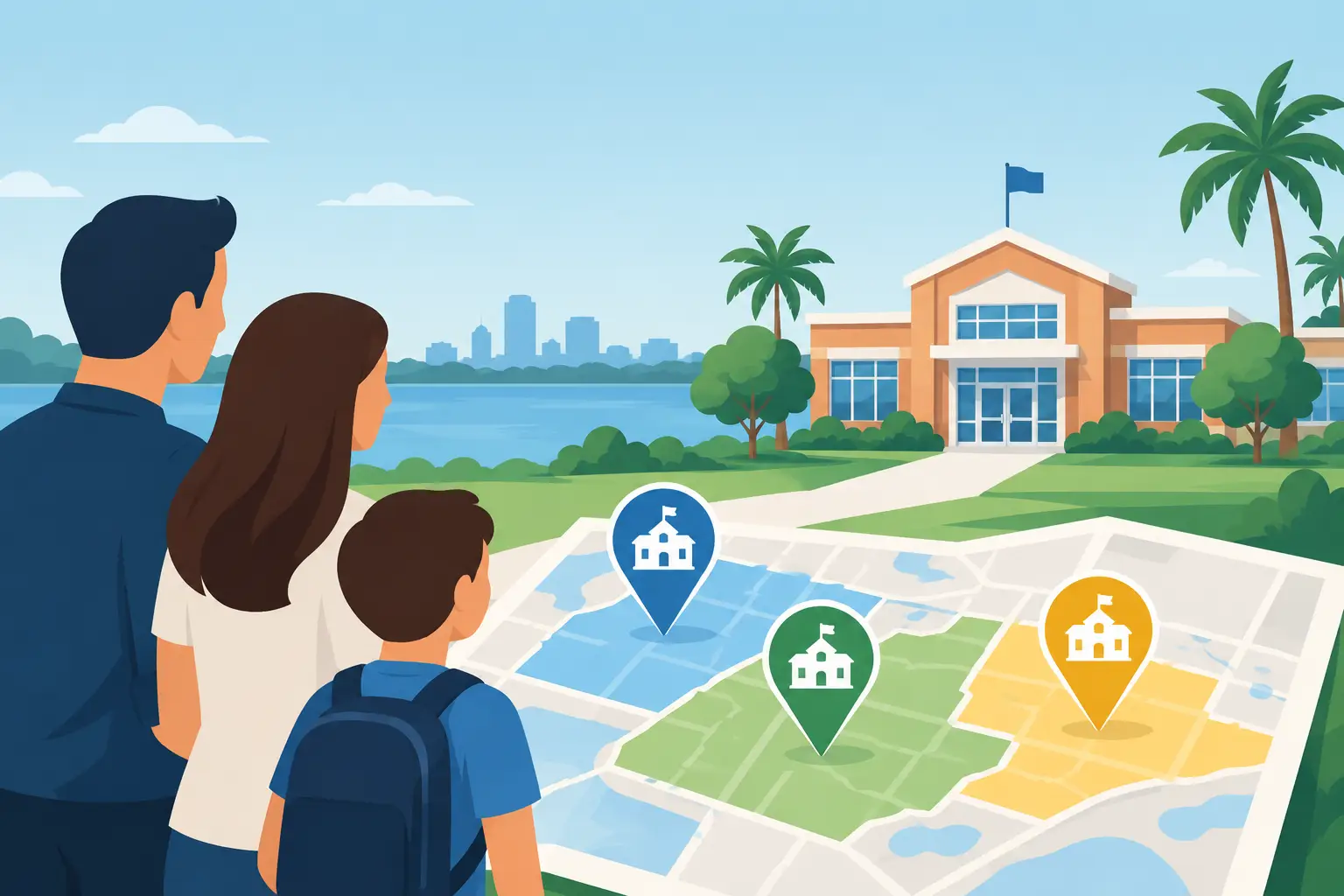
  • How to Compare Central Florida School Zones

    How to Compare Central Florida School Zones

    A house can sit on one side of a street and have a different school assignment than a nearly identical house across the way. That is why buyers who want to compare Central Florida school zones need to start with the exact property address, not a neighborhood name, ZIP code, or listing description.

    In Orange and Seminole counties, school assignment is one part of a larger buying decision. It can affect a buyer’s search area, resale pool, daily driving, before- and after-school logistics, and the price premium attached to certain streets. It should also be handled carefully. School boundaries and program availability can change, and an agent’s opinion is not a substitute for confirmation from the applicable school district.

    Start with the address, not the community

    Central Florida has plenty of communities that cross municipal lines, district boundaries, or both. A Winter Park mailing address can involve Orange County Public Schools or Seminole County Public Schools depending on the property. The same is true around Longwood, Oviedo, Maitland, Casselberry, and parts of Orlando.

    A subdivision name is useful for orienting yourself, but it is not proof of assignment. The Springs in Longwood, for example, has many distinct sections and home types. A buyer should verify the assigned schools for the specific address under contract rather than assume every home in a familiar community follows the same pattern.

    Listing sites sometimes display school information pulled from a third-party database. Those entries can lag behind a boundary update, omit an exception, or confuse an attendance zone with a choice program. Treat them as a starting point only.

    The dependable process is straightforward: enter the exact street address into the district’s official school locator, note the assigned schools, and confirm whether the result applies for the school year when the student would enroll. Keep a screenshot or written record with your transaction file. If a property is new construction, recently replatted, or close to a boundary line, call the district’s student assignment office for confirmation.

    How to compare Central Florida school zones fairly

    The useful comparison is not “which zone is best?” That question depends on a household’s needs and can lead to broad conclusions that do not hold up property by property. A better question is: what does this address require from my household, and what are the verified options connected to it?

    Start by comparing the practical facts for each home under consideration. Look at the assigned elementary, middle, and high school; the grade levels served; the transportation eligibility and bus-stop process; and the daily route from the home. A map may show a school nearby, but the assigned campus may be in another direction entirely.

    Then look at the choices outside the default assignment. Both Orange County Public Schools and Seminole County Public Schools offer programs that may involve applications, eligibility rules, transportation limitations, deadlines, or capacity constraints. A magnet, career academy, charter school, private school, or controlled-open-enrollment option may be relevant to a particular household, but none should be assumed to be available merely because it appears on a map.

    For a relocation buyer, this is often where expectations need adjusting. In some Northeast markets, a town name may reliably signal one district. In Central Florida, municipal identity, mailing address, county line, and school assignment do not always line up neatly. The address controls.

    Compare the commute at the times that matter

    A school-zone conversation is often really a commute conversation. Test the route from the house to the assigned campus in the morning and afternoon, not just on a quiet weekend. Look at major crossing points, rail lines, school traffic patterns, toll roads, and the route to work at the same time.

    This matters in places such as Lake Mary, Heathrow, Oviedo, Winter Springs, and Dr. Phillips, where a short distance can become a longer daily trip depending on the road network. For buyers considering a golf or gated community such as Alaqua Lakes, Lake Forest, or Bay Hill, the gate location and internal street layout can also affect the routine more than expected.

    A home near a school is not automatically easier. School arrival traffic, pickup queues, and parking restrictions can be part of the property’s day-to-day experience. Some buyers consider that convenient; others would rather live several minutes away. There is no universal answer.

    Separate current assignment from future certainty

    School boundaries are administrative decisions, not permanent features of a deed. Enrollment changes, new campuses, additions, program changes, and district planning can all lead to adjustments. No seller, agent, or listing can promise that a current assignment will remain unchanged for the life of ownership.

    That does not mean buyers should ignore school information. It means they should assess it with the right level of confidence. A home clearly located in the middle of an established attendance area generally presents a different boundary-risk question than a new subdivision near a county line or an area seeing substantial development.

    Ask whether the home is in a newly built section, whether nearby land is entitled or actively being developed, and whether the district has published planning materials affecting that area. Those questions are especially relevant around growing edges of Oviedo, Sanford, Apopka, Winter Garden, and east Orange County. They are not predictions. They are a reason to verify the facts before making a location decision.

    What school-zone information can mean for a home’s value

    School assignment can influence demand, but it is rarely the only reason one home sells for more than another. When I review comparable sales, I first look for properties with the same basic market position: similar location, lot, age, square footage, condition, updates, pool, HOA structure, and flood considerations. School assignment is then one factor in understanding why buyers may prefer one pocket over another.

    A common mistake is comparing a renovated home in one attendance area with an original-condition home in another and attributing the entire price gap to schools. The closed sales usually tell a more complicated story. In Winter Park, for example, a few blocks can change lot size, municipal services, architecture, traffic exposure, and proximity to commercial corridors. In Longwood or Lake Mary, gated access, lake frontage, community amenities, and maintenance obligations may matter just as much.

    For sellers, the clean approach is factual. State the currently assigned schools only after verifying them, avoid claims that imply a school is objectively superior, and let the property’s location and features stand on their own. If a buyer asks about school assignment, provide the district verification process rather than making a promise.

    A practical worksheet for comparing two homes

    When two otherwise viable homes have different assignments, write down the same facts for each one. A simple side-by-side comparison prevents a single headline from carrying too much weight.

    • Confirm the assigned schools through the relevant district locator for the expected enrollment year.
    • Measure realistic morning and afternoon travel time from the house, including the work commute that follows.
    • Identify any programs the household may consider and review application deadlines, eligibility, capacity, and transportation rules.
    • Note whether the property is near an attendance boundary, in a new-development area, or subject to a special assignment circumstance.
    • Compare the actual home: condition, lot, HOA rules, insurance considerations, flood zone, taxes, and likely resale competition.

    This process is also useful for buyers without school-age children. Assignment can still affect the future buyer pool, but that does not automatically justify paying more for a house that is otherwise inferior. A move-up buyer may reasonably choose the better lot or better renovation. A downsizer may place more value on single-level living, maintenance, and access to daily services. The right trade-off depends on the buyer’s own horizon and priorities.

    Questions to ask before writing an offer

    Before committing to a property, confirm whether the seller has provided current assignment information and whether it matches the district locator. Ask whether there are any known pending boundary discussions, although the district remains the authority. If enrollment in a particular program is essential, contact that program directly before treating the house as a solution.

    Also be clear about what the contract can and cannot accomplish. A purchase agreement can address property-related contingencies and due-diligence periods, but it does not reserve a seat in a school or guarantee a future assignment. If the decision turns on enrollment, get direct answers from the district before the contingency window closes. For legal or enrollment-policy interpretation, consult the appropriate district office or an attorney.

    The house is a long-term asset, but the daily routine is immediate. Verify the address, test the drive, read the district’s current rules, and then decide whether that particular property works for the life you are actually living.

    Explore Winter Park area neighborhoods

    Winter Park · Maitland · Baldwin Park · Longwood · Lake Mary · What’s my home worth?

  • Florida Relocation Checklist for Central Florida

    Florida Relocation Checklist for Central Florida

    A move to Central Florida can look simple from a distance: choose a home near Orlando, arrange the moving truck, and enjoy the sunshine. In practice, the right Florida relocation checklist starts much earlier. Community fit, commute patterns, insurance costs, property condition, and the timing of your sale or lease all affect whether a home remains a good decision after moving day.

    For households coming from New York, New Jersey, South Florida, Atlanta, Chicago, or Texas, the biggest adjustment is often how local the decision becomes. Two homes with similar square footage and price can offer very different daily routines, expenses, school options, and resale considerations depending on where they sit in Orange or Seminole County.

    Start Your Florida Relocation Checklist Before the Home Search

    Before comparing listings, establish the decisions that will narrow the search. Your budget should account for more than a purchase price and down payment. Florida property taxes, homeowners insurance, potential flood insurance, HOA or condo fees, utilities, maintenance, and commuting costs deserve a place in the monthly calculation.

    Ask your lender for a payment estimate using a realistic insurance figure rather than a generic placeholder. Insurance can vary materially by home age, roof age, construction type, location, and prior claims history. A property farther inland is not automatically inexpensive to insure, and a newer roof does not eliminate every underwriting question. The exact premium will depend on the carrier and the home, so it should be verified before the end of the inspection period whenever possible.

    Timing matters as well. If you are selling a home elsewhere, determine whether you need sale proceeds for the Florida purchase or whether a bridge strategy is available. If you are relocating for work, clarify start dates, remote-work flexibility, and how many in-person visits you can make. Those details shape the offer terms that will be practical for you.

    Choose a Community Based on Daily Life

    Central Florida is not one housing market. Winter Park offers established neighborhoods, a walkable core, and a broad range of home styles, while Lake Mary and Heathrow may appeal to buyers seeking planned communities and access to major employment corridors. Longwood, including The Springs, Sweetwater Oaks, and the Markham Woods area, attracts buyers looking for mature landscaping, larger lots, and a more residential setting.

    Orlando neighborhoods require a similarly close look. Baldwin Park, College Park, Dr. Phillips, and Windermere each offer a distinct mix of housing, amenities, traffic patterns, and price points. Winter Garden and Oviedo can be strong fits for buyers who prioritize newer construction or a particular commute, but distance to work, schools, airports, and preferred activities should be tested in real time.

    A useful approach is to rank your non-negotiables and your preferences separately. A reasonable commute, bedroom count, budget, and access needs may be non-negotiable. A pool, newer kitchen, oversized garage, or a particular architectural style may be preferences. This distinction prevents a beautiful listing from pulling attention away from the practical needs that will matter every weekday.

    Test the Commute and the Surroundings

    Map routes at the hours you expect to travel. Central Florida traffic is influenced by school schedules, tourism, construction, and major event activity. A route that looks convenient at 2:00 p.m. can feel very different during a morning commute.

    When visiting neighborhoods, drive beyond the listing. Check the road access, nearby commercial activity, drainage areas, traffic noise, and the condition of surrounding homes. If schools are a priority, review the current attendance boundaries directly with the appropriate district. Boundaries and programs can change, so they should never be assumed from a listing description alone.

    Build a Search That Reflects the Actual Market

    Online photos are useful, but they are not a complete property evaluation. In Central Florida, a home’s age, roof, HVAC system, windows, plumbing, electrical panel, and drainage can matter as much as its updated finishes. MLS-connected search tools help buyers see active inventory, price changes, and newly listed homes, but the interpretation of what those details mean is where local guidance becomes valuable.

    Decide early whether you prefer an established home, new construction, or a community with an HOA. Established neighborhoods can offer character, larger trees, and locations close to employment and dining. They may also require more immediate attention to major systems. New construction can reduce initial maintenance concerns, yet buyers should still review builder terms, lot location, taxes after reassessment, future development, and the total cost of upgrades.

    For HOA and condominium properties, request the governing documents, current fees, budgets, rules, and any available information on pending assessments. A lower purchase price can be offset by higher recurring fees or restrictions that do not fit your plans. Investors should also confirm rental rules before relying on projected income.

    Inspect for Florida-Specific Costs and Conditions

    A thorough inspection is not a formality. It is the point where a buyer replaces assumptions with property-specific information. Depending on the home, inspections may include a general home inspection, wind mitigation review, four-point inspection, roof evaluation, wood-destroying organism inspection, pool inspection, sewer scope, and mold or air-quality testing when conditions warrant it.

    Not every home needs every specialty inspection. The appropriate scope depends on the property’s age, systems, visible conditions, and insurer or lender requirements. A qualified inspector can identify concerns, but buyers should also understand the likely repair timeline and cost. A roof with a few years of useful life may be acceptable for one buyer and a reason to keep searching for another.

    Flood risk also deserves careful attention. Flood zones, prior water intrusion, drainage, and elevation are separate issues that should be evaluated together. A home outside a designated flood zone may still experience heavy-rain drainage concerns, while a property in a flood zone may have insurance requirements that are manageable within the overall budget. The question is not simply whether to avoid a category. It is whether you understand the risk and cost before committing.

    Prepare for the First 90 Days After Closing

    Relocation goes more smoothly when key tasks are scheduled before you arrive. Florida driver license and vehicle-registration requirements, utility transfers, internet installation, mail forwarding, medical records, pet arrangements, and school enrollment can create avoidable pressure if left until closing week.

    Create a short file for every service provider, warranty, receipt, inspection report, and repair estimate associated with the home. It will be useful when you schedule maintenance, obtain insurance renewals, or eventually prepare the property for resale. New owners should also identify the main water shutoff, electrical panel, irrigation controls, pool equipment, and any HOA contacts during the first few days.

    If the home will be vacant before your move, discuss occupancy, insurance, and utility needs with the appropriate professionals. Florida heat and humidity can turn a small maintenance issue into a larger one when a property is unattended. Keeping the home properly secured and monitored is a practical part of the move, not an afterthought.

    Use a Local Advisor for the Decisions Listings Cannot Answer

    A relocation purchase involves more than finding available homes. It requires comparing value across communities, recognizing when a low list price signals deferred maintenance, structuring an offer around your travel and financing timeline, and keeping inspections and insurance questions moving on schedule.

    With over 37 years in the real estate industry, Will LaValle provides direct, hands-on guidance for buyers relocating to Central Florida. That perspective can be especially useful when you need an honest comparison between homes that look similar online but carry different long-term costs or resale prospects.

    A good relocation plan leaves room for trade-offs without losing sight of the reasons you are moving. Start with the life you want to live after the boxes are unpacked, then let the property search support that decision.

    Explore Winter Park area neighborhoods

    Winter Park · Maitland · Baldwin Park · Longwood · Lake Mary · What’s my home worth?

  • Florida Closing Costs for Buyers and Sellers

    Florida Closing Costs for Buyers and Sellers

    A home can be priced perfectly and still create a surprise at the finish line if the parties have not planned for Florida closing costs. The amount is not one fixed percentage, and the person who pays each charge can change with the contract, the loan program, local custom, and the negotiating strength of the buyer and seller.

    For a Central Florida purchase, the most useful approach is to look beyond a single estimate. Buyers should separate loan-related costs from prepaids and cash needed to close. Sellers should distinguish between transaction expenses, mortgage payoff items, and any negotiated credits. A clear estimate early in the process gives everyone more room to make sound decisions before inspection deadlines and appraisal results begin driving the conversation.

    What are Florida closing costs?

    Closing costs are the fees, taxes, services, and prepaid items required to transfer a property and, when applicable, obtain financing. They are paid through the settlement statement at closing, although some items, such as inspections and an appraisal, are usually paid before closing.

    A buyer using a mortgage may often budget roughly 2% to 5% of the purchase price for closing costs and prepaids, excluding the down payment. That range can be lower or higher depending on interest-rate choices, lender fees, the timing of the closing, homeowner’s insurance premiums, and property taxes. A cash buyer avoids loan charges but still has title, recording, inspection, and other settlement expenses.

    Seller expenses are often larger because they can include real estate brokerage compensation, Florida documentary stamp tax on the deed, title-related charges that the seller agrees or is expected locally to pay, lien payoffs, and buyer credits negotiated in the contract. The right number is the net-proceeds estimate prepared for that specific property, not a generic online percentage.

    Typical Florida closing costs for buyers

    For buyers, the lender’s Loan Estimate is the starting point. Federal rules require lenders to provide it shortly after a complete mortgage application, and it identifies estimated loan charges, third-party services, cash to close, and important loan terms. Review it promptly. A low advertised interest rate can be accompanied by discount points, while a lender credit can reduce closing costs in exchange for a higher rate.

    Loan, title, and recording charges

    Mortgage-related buyer costs commonly include an origination or underwriting fee, appraisal, credit report, flood certification, and, depending on the program, mortgage insurance or a funding fee. Not every lender uses the same labels, so compare the total lender charges and the rate together rather than judging one line item.

    Buyers commonly pay for the lender’s title insurance policy, which protects the lender’s interest in the property. They may also pay recording charges for the deed and mortgage, as well as settlement or closing fees. An owner’s title insurance policy protects the buyer’s ownership interest. In many Central Florida transactions, the seller customarily pays for that owner’s policy, but it is a negotiable contract term and local practices are not a substitute for reading the signed agreement.

    A survey may be needed by the lender or recommended where boundaries, fences, easements, or additions raise questions. Older surveys are sometimes available, but whether one can be accepted depends on the title company, lender, and circumstances of the property.

    Prepaids are not always fees

    Buyers moving from states with different tax and insurance systems are often surprised by prepaids. These are real cash requirements, but they are not necessarily charges for a service performed at closing. They can include the first year of homeowner’s insurance, initial escrow deposits for future tax and insurance bills, and daily mortgage interest from the closing date through the end of the month.

    The closing date matters. A late-month closing usually requires fewer days of prepaid interest than an early-month closing. On the other hand, insurance premiums on a Florida home can be substantial, particularly near the coast, on older properties, or where the roof and wind-mitigation features affect eligibility and pricing. Obtain insurance quotes early, not after the inspection period is nearly over.

    Property taxes are also prorated between buyer and seller based on the contract and the date of closing. Florida’s tax calendar can make this confusing because bills are issued later in the year for the current tax year. The settlement agent will account for the portion each party owes, but a buyer should still understand whether the lender will collect taxes through an escrow account.

    Condo and HOA considerations

    A condominium or homeowners association can add its own closing items. Buyers may see application fees, transfer fees, capital contributions, estoppel-related charges, or advance association assessments. Some communities also have approval procedures with specific deadlines.

    These expenses vary considerably. A buyer considering a condo in Winter Park, Baldwin Park, Dr. Phillips, or a planned community in Lake Mary should review the association documents, current budget, reserves, pending assessments, rental restrictions, and insurance responsibilities as carefully as the purchase contract. A lower purchase price does not always mean lower ownership costs.

    What sellers commonly pay at closing

    Sellers typically begin with real estate brokerage compensation and then work through the costs required to deliver clear title and satisfy the contract. Compensation is negotiable and should be shown clearly in the listing agreement and estimated proceeds. Depending on the transaction, a seller may agree to contribute toward a buyer’s closing costs, repair expenses, or specific lender-required items.

    Florida documentary stamp tax on the deed is customarily paid by the seller in many transactions. The tax is generally calculated from the consideration paid for the property, though special situations can require closer review. Sellers also commonly pay to satisfy mortgages, home equity lines, judgments, municipal liens, or other obligations attached to the property.

    If the seller has a mortgage, the payoff amount can differ from the balance shown on a monthly statement because interest continues to accrue and the lender may charge payoff or recording-related fees. This is one reason a net sheet should be updated as closing approaches, especially if the contract price, buyer credit, or closing date changes.

    Sellers may also be responsible for the owner’s title insurance policy under local custom or contract terms, along with deed preparation, title search, or settlement charges. In Orange and Seminole County transactions, these allocations are frequently discussed at the offer stage. There is no advantage to assuming who pays what when a clear contract provision can settle it.

    For sellers who are not U.S. persons for tax purposes, FIRPTA withholding may apply. It is not simply another routine closing cost, and it deserves early attention from a qualified tax professional and the closing agent. Waiting until the week of closing can put the transaction at risk.

    How contract negotiations affect Florida closing costs

    The purchase price is only one part of an offer. A seller comparing two similar offers should consider the requested buyer credit, financing terms, inspection demands, appraisal exposure, proposed closing date, and which expenses each side has agreed to pay. A slightly higher price can produce lower net proceeds if it includes a large credit or requires costly concessions.

    For buyers, asking the seller for a closing-cost credit can preserve cash for moving, reserves, or improvements. The trade-off is that the loan program limits how much credit can be used, and the credit cannot generally exceed allowable closing costs and prepaids. It may also make an offer less attractive in a competitive situation. In some cases, negotiating the price, repair, or rate structure produces a better outcome than focusing only on the credit.

    A buyer should not assume a seller credit means the home is overpriced, and a seller should not assume a credit is automatically a poor choice. It depends on the property’s market position, competing offers, appraisal support, and the buyer’s financing.

    Planning before you make an offer

    Before writing an offer, ask your lender for a scenario-specific Loan Estimate or detailed cost worksheet based on the expected price, down payment, rate, and closing date. Ask the insurance agent for a quote based on the actual address and home’s construction details. Then have the settlement agent or your real estate professional identify customary title and recording allocations for the contract you are considering.

    Sellers should request a current payoff statement and prepare a net-proceeds estimate before setting an asking price or accepting an offer. Include likely brokerage compensation, documentary stamps, title allocations, property-tax proration, association items, and any anticipated buyer credit. For an investor or owner with a second lien, tenant deposit, or prior loss-mitigation history, the estimate may need additional review.

    The goal is not to predict every dollar before a home is under contract. It is to avoid making a pricing or offer decision without understanding the range of likely cash required or proceeds available. If you are buying, selling, or relocating to Central Florida, a direct conversation with an experienced local REALTOR® can turn the settlement statement from a last-minute surprise into a manageable part of the plan.

    Explore Winter Park area neighborhoods

    Winter Park · Maitland · Baldwin Park · Longwood · Lake Mary · What’s my home worth?

  • What an Orlando Buyer Agent Should Do for You

    What an Orlando Buyer Agent Should Do for You

    An Orlando buyer agent should do far more than send listings and arrange showings. In a market as varied as Central Florida, the right advisor helps you determine where a home fits your life, what it is truly worth, and which details could affect your costs after closing. That is especially valuable when you are relocating, buying from out of state, or trying to make a careful decision in a fast-moving price range.

    What an Orlando Buyer Agent Brings to the Purchase

    Orlando is not one uniform market. A buyer comparing Winter Park, Baldwin Park, College Park, Dr. Phillips, Lake Mary, Windermere, and Winter Garden is comparing different housing stock, tax considerations, commute patterns, homeowner association structures, and resale profiles. A home that appears similarly priced online may offer a very different long-term ownership experience depending on its location, condition, lot, insurance history, and community rules.

    A buyer’s agent brings that context to the search. The work begins with a candid conversation about budget, timing, financing, preferred lifestyle, and the trade-offs you are willing to make. For one household, access to downtown Orlando or a major employment center may drive the search. For another, a larger lot, a specific architectural style, or proximity to family may matter more. Investors may be focused on rental demand, carrying costs, and restrictions that affect leasing.

    The goal is not to tell clients where they should live. It is to help them compare properties and communities based on their own priorities, with useful market information behind the recommendation.

    A better search than a list of properties

    Online portals are useful for getting familiar with the market, but they do not replace MLS-based information and local interpretation. Status changes can happen quickly. A property may have gone under contract, returned to the market, or received price adjustments that change the negotiating picture. Details about disclosures, community fees, prior sales, and listing history can also shape whether a showing is worth your time.

    A strong buyer agent narrows the search without narrowing your options prematurely. That means identifying homes that match the basic criteria, but also pointing out possibilities that may not look perfect in a thumbnail photo and warning you about issues that are easy to overlook from a distance. An unusual floor plan, a busy road, deferred maintenance, limited guest parking, or a restrictive HOA can matter as much as square footage.

    For relocating buyers, this guidance can save repeated trips and reduce the pressure to make a decision after seeing only a handful of homes. The best search process is organized, current, and responsive to what you learn from each showing.

    How an Orlando Buyer Agent Evaluates Value

    The list price is a seller’s starting position, not an appraisal and not a guarantee of market value. A buyer agent should review relevant recent sales, active competition, expired listings when useful, property condition, and the specific features buyers are paying for in that neighborhood.

    Comparable sales are never entirely mechanical. A renovated home in one part of a neighborhood may not compare cleanly with an original-condition home nearby. A pool, water view, oversized lot, updated roof, or desirable school-zone boundary can influence value, but the size of that influence depends on the buyer pool and current inventory. Homes in established areas such as Winter Park or along the Markham Woods corridor can require especially careful comparison because character, lot quality, and renovation level vary widely.

    Will LaValle’s over 37 years in the real estate industry provide a broader perspective when evaluating a purchase. That experience is helpful when a property raises questions about financing, condition, prior market history, or whether the asking price is supported by the available evidence.

    A sound value discussion should be straightforward. Sometimes the right answer is that a home is priced fairly and merits a strong offer. Other times, the market support is thin, the needed repairs are significant, or the seller’s expectations are ahead of comparable sales. A buyer deserves to hear both possibilities before deciding how to proceed.

    Looking beyond the purchase price

    Your monthly and long-term costs deserve the same attention as the offer amount. Property taxes can change after a sale, and Florida insurance costs can vary considerably by roof age, construction, location, prior claims, and carrier availability. Condo and townhome buyers should review association budgets, reserves, assessments, rental rules, pet policies, and any pending projects. Buyers considering a pool home need to account for maintenance, equipment age, and safety requirements.

    Flood-zone information, drainage, and storm preparation are also worth understanding. Being outside a designated flood zone does not mean a property has no water-related risk, and being in one does not automatically make a home unsuitable. It means the buyer should understand insurance requirements, elevation information when available, prior conditions, and the practical cost of ownership.

    These are not reasons to avoid Florida property. They are reasons to evaluate it with clear eyes before the inspection period ends.

    Representation Matters When It Is Time to Offer

    A well-written offer is more than a number. Price matters, but sellers also consider financing strength, earnest money, inspection timelines, appraisal terms, closing date, and the overall certainty of the transaction. The strongest terms for one buyer may create unnecessary risk for another.

    For example, waiving inspections may seem attractive in a competitive situation, but it can expose a buyer to costly surprises. Extending an inspection period can provide more time for specialists, while a shorter period may make an offer more competitive. The right decision depends on the home’s age and condition, the buyer’s tolerance for repairs, available cash, financing structure, and the level of competition.

    Your agent should explain the choices rather than push a standard offer. In Florida, buyer representation and compensation terms should also be discussed clearly before touring homes. Compensation is negotiable, and a written agreement should make the scope of representation, duration, and any buyer responsibilities understandable from the start.

    Negotiation does not stop at acceptance

    Once a contract is signed, the transaction moves into a phase where details matter. Inspections may identify roof concerns, electrical issues, plumbing repairs, moisture intrusion, aging HVAC equipment, or permit questions. The appropriate response can range from accepting a minor condition to requesting a credit, seeking a repair, renegotiating, or ending the contract within the applicable contingency period.

    An experienced buyer agent helps separate ordinary homeownership items from issues that deserve further investigation. The agent also coordinates communication among the parties while keeping the buyer informed about deadlines. Lenders, inspectors, title professionals, appraisers, sellers, and association managers each play a role, but the buyer needs one accountable professional who understands the full timeline.

    That direct access is particularly important for clients purchasing from New York, New Jersey, South Florida, Atlanta, Chicago, or Texas. Distance creates practical challenges, from arranging inspections to reviewing documents and making decisions quickly. A local agent who remains personally involved can provide the timely perspective that a remote buyer cannot get from listing photos alone.

    Questions Worth Asking Before You Choose an Agent

    Ask how the agent approaches neighborhood comparisons, property valuation, inspection negotiations, and communication outside normal business hours. Find out whether you will work directly with the agent or be transferred to a team member after the initial conversation. If you are relocating, ask how the agent helps buyers make decisions when they do not yet know the area well.

    You should also ask about relevant experience. A buyer interested in a condominium faces different due-diligence questions than a buyer purchasing a single-family home in an older neighborhood. A first-time buyer needs a different level of explanation than an experienced investor. The right agent adjusts the process without making assumptions.

    A referral from an out-of-area real estate professional deserves the same standard of care. Referring agents need confidence that their client will receive candid guidance, prompt updates, and attentive representation from the first conversation through closing.

    The right home is not always the first home that looks good online, and the best offer is not always the highest one. Work with an advisor who will take the time to understand your priorities, explain the trade-offs, and stay accessible when a decision needs to be made.

    Explore Winter Park area neighborhoods

    Winter Park · Maitland · Baldwin Park · Longwood · Lake Mary · What’s my home worth?

  • Luxury Home Marketing Guide for Central Florida

    Luxury Home Marketing Guide for Central Florida

    A luxury listing can lose momentum before the first showing if the price, presentation, and buyer strategy are not aligned. This luxury home marketing guide is built for sellers who need more than a yard sign and a standard photo package. High-value homes require a plan that explains the property clearly, reaches qualified buyers, and protects the seller’s time and privacy.

    In Central Florida, luxury means different things in different markets. A historic Winter Park home, a lakefront property in Windermere, a residence near the Markham Woods corridor, and a newer estate in Lake Mary may attract very different buyers. The marketing should reflect the specific reasons a buyer would choose that home, not rely on a generic luxury label.

    Start With the Right Price and Position

    Marketing cannot compensate for a price that is disconnected from the market. Luxury properties often have fewer direct comparables, particularly when a home has waterfront, substantial acreage, a gated location, architectural distinction, or major renovations. That makes pricing less mechanical than it is for a typical neighborhood resale.

    A useful pricing analysis considers recent closed sales, active competition, withdrawn listings, and pending contracts when available. It should also account for condition, location within the community, lot quality, views, floor plan, and the cost a buyer would face to recreate the home’s improvements. A pool, updated kitchen, summer kitchen, guest suite, generator, and newer roof may matter greatly, but their value is not always dollar-for-dollar compared with the cost of installation.

    The goal is to establish a credible position at launch. An ambitious price can be appropriate when the property is genuinely scarce and demand supports it. But pricing far above comparable alternatives often causes qualified buyers to wait, assuming the seller will eventually adjust. The first few weeks bring the strongest attention because buyers, local agents, and relocation contacts notice a new listing quickly. That period should be used well.

    Prepare the Property Before the Camera Arrives

    Luxury buyers expect a home to feel cared for from the first image through the final walk-through. Preparation is not about stripping away every sign of life. It is about making the home’s scale, light, layout, and best features easy to understand.

    Begin with deferred maintenance. Address visible roof or exterior concerns, damaged screens, tired landscaping, paint touch-ups, loose hardware, and HVAC issues before they become questions during showings or inspections. A pre-listing inspection can be worthwhile for an older home or a property with complex systems. It gives the seller time to make informed repairs rather than negotiating from a weaker position after a contract is signed.

    Staging should fit the property and likely buyer. In a large residence, empty rooms can look smaller in photographs and leave buyers uncertain about how the space functions. In a furnished home, editing is often more effective than fully staging. Remove excess furniture, personal collections, oversized rugs, and visual clutter so the architecture takes the lead.

    Outdoor areas deserve the same attention as the interior. In Central Florida, buyers often place real value on covered lanais, pools, outdoor kitchens, landscaping, water access, and sunset views. Clean the pool, refresh planting beds, inspect exterior lighting, and make sure patios and docks are presented as usable living areas rather than background features.

    Build a Luxury Marketing Package That Explains the Home

    A luxury listing needs more than attractive images. It needs assets that help a serious buyer understand why the property is worth considering before requesting a private showing. The strongest package usually combines professional photography with a clear narrative and accurate property details.

    Photography should capture room relationships, natural light, exterior approach, outdoor living, and the home’s defining features. Wide-angle images are useful, but they should not distort room size or make a property feel unfamiliar when buyers arrive. Twilight photography can be especially effective for homes with landscape lighting, pool areas, lake views, or dramatic exterior architecture.

    Video can add value when it has a purpose. A well-produced property film can show how someone moves from the entry to the main living areas and outdoors, or convey the experience of a lakefront setting better than still images alone. A rushed video tour with shaky footage usually does the opposite. Quality matters more than checking a marketing box.

    For many listings, the launch package should include:

    • Professional interior, exterior, and aerial photography where appropriate
    • A property video or guided visual tour that reflects the home’s strongest story
    • Floor plans and detailed feature information for serious buyers and their agents
    • Carefully written MLS remarks and property descriptions that are accurate, specific, and easy to scan

    The written description should lead with the features that cannot be changed: location, water or golf frontage, lot size, architecture, privacy, school options, or proximity to key destinations. Then it should explain the upgrades and daily lifestyle benefits. Avoid unsupported superlatives. Buyers respond better to useful specifics than broad claims that every property is “one of a kind.”

    Reach Buyers Through More Than One Channel

    The MLS remains central because it places the property in front of active buyers and the agents representing them. A luxury marketing plan should also create direct visibility among local real estate professionals, past contacts, relocation networks, and buyers monitoring high-end inventory in a particular community.

    This matters in Central Florida because a purchaser may come from outside the immediate market. Relocating buyers from the Northeast, South Florida, Atlanta, Chicago, or Texas may have begun their search online but still need local context before acting. They want to know whether a location works for travel, schools, healthcare, dining, commute patterns, or access to family and recreation. Marketing should anticipate these questions without making assumptions about a buyer’s background or preferences.

    Digital promotion is most effective when it sends buyers to complete, accurate information. A short social media post can create awareness, but it should not carry the entire campaign. The listing itself needs compelling photos, thorough details, a clear location, and a straightforward next step for requesting a showing.

    Private marketing can be useful for a seller who values discretion, but it involves a trade-off. Limiting public exposure may reduce unwanted attention and protect privacy, yet it can also reduce the buyer pool and competitive pressure. In many cases, a planned public launch with controlled showings offers the better balance. The right approach depends on the seller’s priorities, the property’s uniqueness, and current inventory levels.

    Make Showings Deliberate and Secure

    Luxury buyers often expect flexibility, but sellers should not have to accept disorganized access. Require confirmed appointments, communicate showing instructions clearly, and verify that buyers are represented or financially qualified when appropriate. For high-value homes, a buyer qualification process may include proof of funds or lender confirmation before a private tour.

    Showings should feel calm and prepared. Temperature, lighting, window coverings, pool equipment, and outdoor areas all affect the experience. Leave concise property information available, including improvement dates, utility details, survey information if available, and community documents. For waterfront or estate properties, details about dock permits, irrigation, septic systems, well water, generators, security features, and insurance history can save time later.

    Open houses are not automatically right for every luxury property. They can create useful exposure in a highly desirable neighborhood or during a strong launch period. For a more private home, agent previews and scheduled private appointments may produce better results. The decision should be based on the likely buyer, security considerations, and the seller’s comfort level.

    Track Response and Adjust With Evidence

    A marketing plan should be reviewed after launch, not left on autopilot. Look beyond total online views. The more useful signals are showing requests, repeat visits, buyer-agent feedback, saves, inquiries, and how the home compares with competing listings that enter the market.

    Feedback should be sorted carefully. A single comment about paint color may be personal preference. Repeated concerns about price, condition, floor plan, road noise, or location deserve attention. If qualified buyers are touring the home but not moving forward, the presentation or pricing may need adjustment. If there are few tours at all, the issue is often positioning, exposure, or price.

    Any adjustment should be purposeful. A modest price change that still leaves the property above stronger alternatives may not change buyer behavior. Likewise, replacing the lead photo, improving the description, or adding missing floor plans can sometimes improve response without changing price. The facts should guide the decision.

    A luxury sale is rarely about creating noise for its own sake. It is about presenting the home with care, communicating its value honestly, and making it easy for the right buyer to take the next step. Sellers who want a property-specific plan should work with an agent who can evaluate the home, the competition, and the buyers most likely to respond – then stay personally involved from launch through closing.

    Explore Winter Park area neighborhoods

    Winter Park · Maitland · Baldwin Park · Longwood · Lake Mary · What’s my home worth?