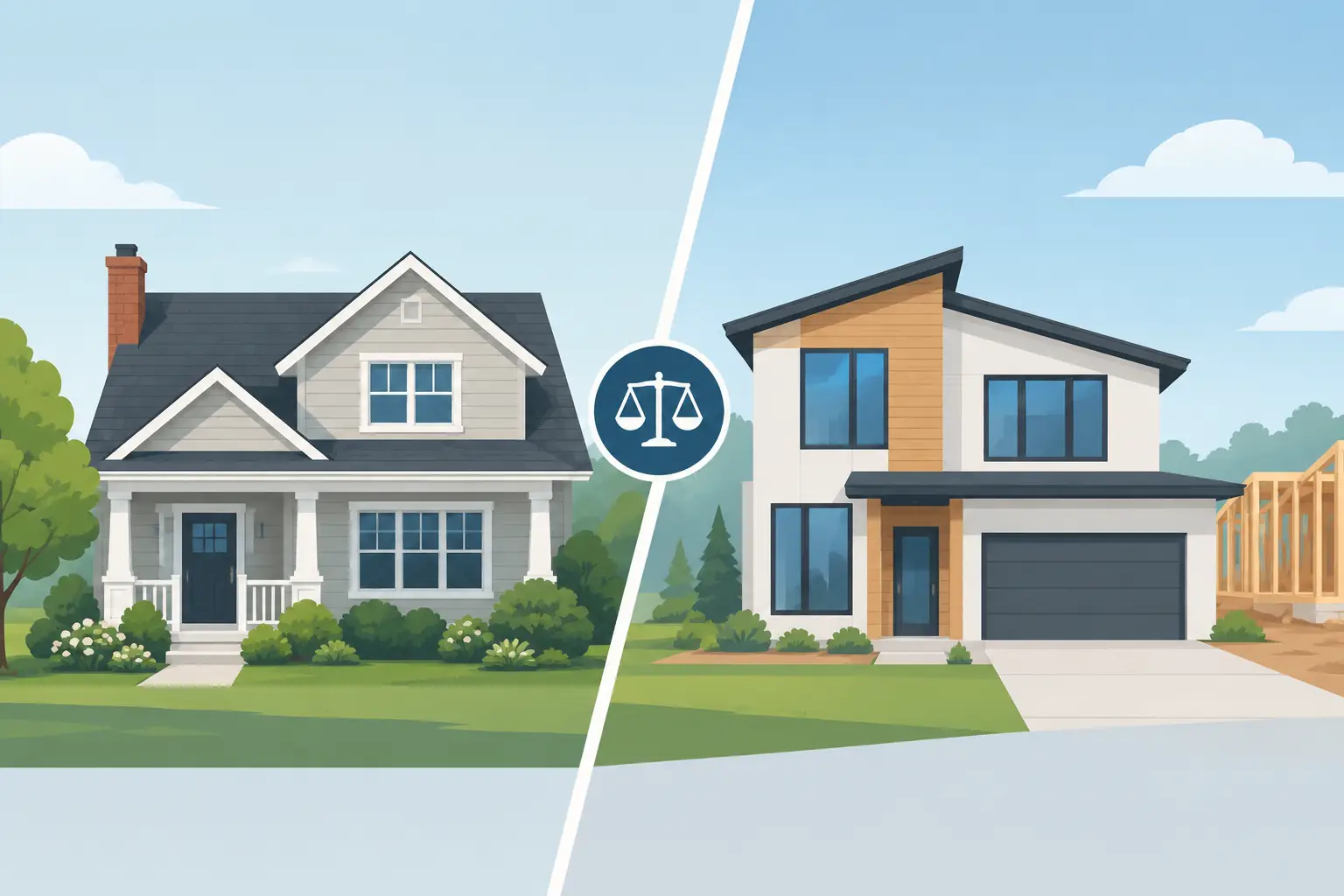
The resale homes versus new construction question usually looks simple until a buyer starts comparing the actual monthly cost, the lot, the insurance file, and the contract. A new home may have clean finishes and a builder warranty. A resale home in Winter Park, Longwood, or Maitland may have the better location, mature landscaping, and a more established resale market. Neither is automatically the better purchase.
For a move-up buyer, downsizer, or relocating household, the useful comparison begins with the specific house rather than the category. I would want to see the closed sales that support the price, how the property compares with nearby alternatives, the insurance and flood information, and every recurring community cost. A newer home can be overpriced. An older home can be a deferred-maintenance project disguised by fresh paint.
Resale homes versus new construction in Central Florida
A resale home gives you something a model home cannot: a finished record. You can inspect the roof age, look at the condition of the HVAC systems, review permits where applicable, see the drainage after a summer storm, and learn how the home fits within the street and surrounding properties. In established areas such as The Springs, Sweetwater Oaks, Wekiva, College Park, and Baldwin Park, the setting is often a major part of the value.
New construction offers a different set of advantages. The layout may better suit current preferences, with taller ceilings, larger closets, open kitchen and living areas, impact-rated openings where specified, and new mechanical systems. Buyers also tend to value the lower near-term maintenance burden. In communities farther out along the Markham Woods corridor, around Lake Mary, Sanford, Oviedo, Apopka, and Winter Garden, new development can provide choices that are hard to find in older neighborhoods.
The trade-off is that new does not mean finished in every sense. The house may be complete while the community is still building around it. Construction traffic, vacant lots, future phases, amenity completion, and the final look of nearby streets all matter. A buyer should also ask whether the tax assessment reflects the completed home yet, rather than assuming the current tax bill will remain the same.
Location is usually harder to replace than finishes
A resale home in a mature neighborhood may sit on a larger lot with established trees, sidewalks, access to lakes or parks, and a shorter drive to the places a household uses most. That can matter more over time than a new backsplash or appliance package.
For example, a buyer considering a new home near Lake Nona or west Orange County may find a very different daily rhythm than in Baldwin Park, Winter Park 32789, or College Park. Someone focused on golf and gated living may compare a newer build against an existing home in Heathrow, Alaqua, Alaqua Lakes, Lake Forest, Magnolia Plantation, or Bay Hill. The right answer depends on the home, the membership options if any, the commute, and how much the buyer values an established setting.
On the other hand, an older home near a preferred street is not automatically a bargain. In parts of Winter Park, Maitland, and Longwood, a house can command a premium because the location is scarce even when its systems are nearing replacement. The purchase decision needs to account for that honestly.
The inspection gap is smaller than many buyers think
A common mistake is treating a new home as though it does not need inspections. It does.
With resale, an inspection can identify roof wear, polybutylene or aging plumbing concerns, electrical panel issues, moisture intrusion, wood-destroying organisms, drainage problems, and work done without proper permits. In Central Florida, roof condition carries extra weight because insurers often scrutinize age, remaining useful life, and the form of the roof. A four-point inspection and wind mitigation inspection may be relevant to insurance underwriting.
With new construction, the concerns are different but still real. An independent inspection before drywall, if the builder allows it, can reveal framing, wiring, plumbing, or HVAC installation items that are much easier to address before walls are closed. A final inspection can identify grading, caulking, doors, windows, appliances, and finish issues. A separate inspection near the end of the builder warranty period can be worthwhile as well.
Florida municipal inspections are necessary, but they are not a substitute for an inspector working for the buyer. The builder’s warranty is valuable, yet a warranty does not prevent a defect. It establishes a process for reporting and correcting one.
Hurricane season runs from June through November, which affects both types of transactions. For resale homes, an approaching storm can delay inspections, insurance binding, appraisals, and closing. For new construction, rain can also affect site work, exterior completion, landscaping, and the final certificate process. Buyers relocating from the Northeast, Chicago, Atlanta, or Texas are often surprised by how quickly insurance availability can become the pacing item on a Florida purchase.
Insurance, flood zones, and monthly ownership cost
Insurance deserves attention before the contract becomes emotionally important. Ask for an insurance quote early, not after the inspection period is nearly over. The carrier will look at factors such as roof information, construction type, prior claims, wind features, and location. A newer roof or new construction may help, but it does not guarantee a particular premium or eligibility.
Flood is separate from homeowners insurance. A property outside a mapped high-risk flood zone can still experience heavy-rain or drainage issues, while a property in a flood zone may require flood insurance for a financed purchase. Review the flood zone, elevation information when available, prior flood disclosures, and the practical drainage around the house. Near lakes, retention areas, and low-lying portions of Central Florida, this is not paperwork to skim.
Then compare the whole carrying cost. A new community may have an HOA, a CDD assessment, or both. A CDD is not simply an HOA fee. It is often a long-term assessment connected to infrastructure and commonly appears on the tax bill. Resale homes can have HOA costs too, especially in gated communities such as Heathrow or Lake Forest, but the structure and rules may be very different.
Read the HOA documents, budget, reserve information where available, rental restrictions, architectural rules, and any pending special assessment information. In a resale transaction, the seller can provide a clearer picture of how the association operates. In a new community, some details may still be evolving while the developer controls the association.
Contracts and appraisal work differently with builders
A resale contract is usually negotiated around a known house, known condition, and comparable closed sales. The appraisal asks whether recent market evidence supports the contract price. In a neighborhood with enough similar sales, that process can be relatively straightforward. In a distinctive waterfront, golf-front, or heavily renovated property, it requires more judgment.
A builder contract is generally written by the builder and is not the same as a standard resale contract. It can address deposits, design selections, construction delays, closing dates, warranty procedures, lender requirements, and remedies in ways buyers may not expect. Have a Florida real estate attorney review terms that raise questions. Do not assume a model-home conversation changes what is written in the contract.
Builder incentives can be useful, but compare the complete offer. A rate incentive, closing-cost credit, or upgrade allowance may have value, yet the base price, lot premium, design center selections, and financing terms still need to be evaluated together. As someone who has spent years around appraisals and pricing, I can say the cleanest-looking incentive is not always the lowest-cost transaction.
For appraisal purposes, builders sometimes use sales that include concessions or upgrades that are not obvious from the headline price. A buyer should understand exactly what is included in the home being purchased and what similar completed homes actually sold for.
Taxes and future resale deserve a second look
Florida’s homestead exemption and property tax portability can be meaningful for an owner moving from one Florida homesteaded property to another. They are not automatic assumptions, and eligibility matters, so buyers and sellers should confirm details with the county property appraiser and a qualified tax professional.
Relocating buyers also appreciate Florida’s lack of state income tax, but that should not become a shortcut in the home comparison. Property taxes, insurance, HOA or CDD obligations, maintenance, and commuting costs are part of the real budget. A low initial tax amount on a newly built home may change after the property is fully assessed.
Think about resale before choosing an unusual plan or expensive upgrade package. A premium lot in the right setting can be durable value. Highly personal finishes, a room conversion that removes a bedroom, or a large design-center spend may not return dollar for dollar. The same is true with older resale homes: thoughtful improvements can help, but not every renovation is supported by nearby closed sales.
The practical choice is the one that fits how you will live, carries a cost you understand, and can be supported by the property rather than a sales presentation. Before deciding, compare the actual homes side by side with insurance quotes, HOA or CDD documents, inspection findings, and relevant closed sales. That is where a clear decision usually appears.
Explore Winter Park area neighborhoods
Winter Park · Maitland · Baldwin Park · Longwood · Lake Mary · What’s my home worth?
Thinking about selling?
What is your home actually worth?
An online estimate is a starting point, not a price. Send me your address and I’ll put together the recent closed sales near you, the current competition and a price range that holds up with an appraiser. No cost, nothing owed.
Or ask me a question here and I’ll get back to you the same day.