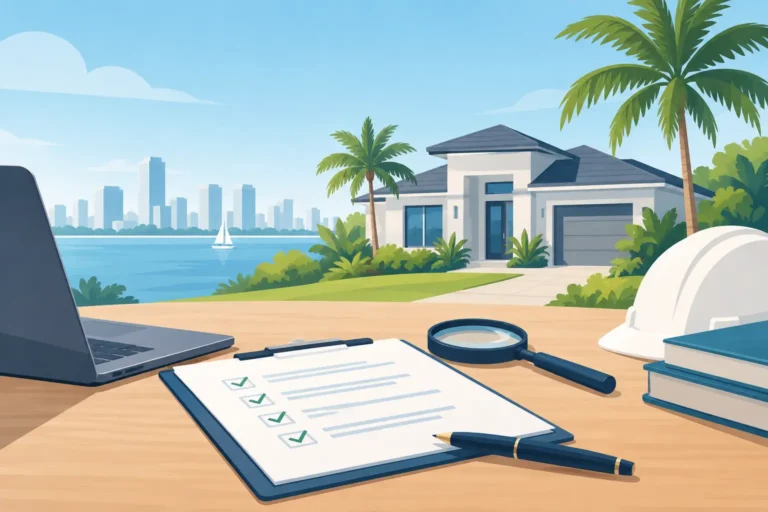
A move to Central Florida can look simple from a distance: choose a home near Orlando, arrange the moving truck, and enjoy the sunshine. In practice, the right Florida relocation checklist starts much earlier. Community fit, commute patterns, insurance costs, property condition, and the timing of your sale or lease all affect whether a home remains a good decision after moving day.
For households coming from New York, New Jersey, South Florida, Atlanta, Chicago, or Texas, the biggest adjustment is often how local the decision becomes. Two homes with similar square footage and price can offer very different daily routines, expenses, school options, and resale considerations depending on where they sit in Orange or Seminole County.
Start Your Florida Relocation Checklist Before the Home Search
Before comparing listings, establish the decisions that will narrow the search. Your budget should account for more than a purchase price and down payment. Florida property taxes, homeowners insurance, potential flood insurance, HOA or condo fees, utilities, maintenance, and commuting costs deserve a place in the monthly calculation.
Ask your lender for a payment estimate using a realistic insurance figure rather than a generic placeholder. Insurance can vary materially by home age, roof age, construction type, location, and prior claims history. A property farther inland is not automatically inexpensive to insure, and a newer roof does not eliminate every underwriting question. The exact premium will depend on the carrier and the home, so it should be verified before the end of the inspection period whenever possible.
Timing matters as well. If you are selling a home elsewhere, determine whether you need sale proceeds for the Florida purchase or whether a bridge strategy is available. If you are relocating for work, clarify start dates, remote-work flexibility, and how many in-person visits you can make. Those details shape the offer terms that will be practical for you.
Choose a Community Based on Daily Life
Central Florida is not one housing market. Winter Park offers established neighborhoods, a walkable core, and a broad range of home styles, while Lake Mary and Heathrow may appeal to buyers seeking planned communities and access to major employment corridors. Longwood, including The Springs, Sweetwater Oaks, and the Markham Woods area, attracts buyers looking for mature landscaping, larger lots, and a more residential setting.
Orlando neighborhoods require a similarly close look. Baldwin Park, College Park, Dr. Phillips, and Windermere each offer a distinct mix of housing, amenities, traffic patterns, and price points. Winter Garden and Oviedo can be strong fits for buyers who prioritize newer construction or a particular commute, but distance to work, schools, airports, and preferred activities should be tested in real time.
A useful approach is to rank your non-negotiables and your preferences separately. A reasonable commute, bedroom count, budget, and access needs may be non-negotiable. A pool, newer kitchen, oversized garage, or a particular architectural style may be preferences. This distinction prevents a beautiful listing from pulling attention away from the practical needs that will matter every weekday.
Test the Commute and the Surroundings
Map routes at the hours you expect to travel. Central Florida traffic is influenced by school schedules, tourism, construction, and major event activity. A route that looks convenient at 2:00 p.m. can feel very different during a morning commute.
When visiting neighborhoods, drive beyond the listing. Check the road access, nearby commercial activity, drainage areas, traffic noise, and the condition of surrounding homes. If schools are a priority, review the current attendance boundaries directly with the appropriate district. Boundaries and programs can change, so they should never be assumed from a listing description alone.
Build a Search That Reflects the Actual Market
Online photos are useful, but they are not a complete property evaluation. In Central Florida, a home’s age, roof, HVAC system, windows, plumbing, electrical panel, and drainage can matter as much as its updated finishes. MLS-connected search tools help buyers see active inventory, price changes, and newly listed homes, but the interpretation of what those details mean is where local guidance becomes valuable.
Decide early whether you prefer an established home, new construction, or a community with an HOA. Established neighborhoods can offer character, larger trees, and locations close to employment and dining. They may also require more immediate attention to major systems. New construction can reduce initial maintenance concerns, yet buyers should still review builder terms, lot location, taxes after reassessment, future development, and the total cost of upgrades.
For HOA and condominium properties, request the governing documents, current fees, budgets, rules, and any available information on pending assessments. A lower purchase price can be offset by higher recurring fees or restrictions that do not fit your plans. Investors should also confirm rental rules before relying on projected income.
Inspect for Florida-Specific Costs and Conditions
A thorough inspection is not a formality. It is the point where a buyer replaces assumptions with property-specific information. Depending on the home, inspections may include a general home inspection, wind mitigation review, four-point inspection, roof evaluation, wood-destroying organism inspection, pool inspection, sewer scope, and mold or air-quality testing when conditions warrant it.
Not every home needs every specialty inspection. The appropriate scope depends on the property’s age, systems, visible conditions, and insurer or lender requirements. A qualified inspector can identify concerns, but buyers should also understand the likely repair timeline and cost. A roof with a few years of useful life may be acceptable for one buyer and a reason to keep searching for another.
Flood risk also deserves careful attention. Flood zones, prior water intrusion, drainage, and elevation are separate issues that should be evaluated together. A home outside a designated flood zone may still experience heavy-rain drainage concerns, while a property in a flood zone may have insurance requirements that are manageable within the overall budget. The question is not simply whether to avoid a category. It is whether you understand the risk and cost before committing.
Prepare for the First 90 Days After Closing
Relocation goes more smoothly when key tasks are scheduled before you arrive. Florida driver license and vehicle-registration requirements, utility transfers, internet installation, mail forwarding, medical records, pet arrangements, and school enrollment can create avoidable pressure if left until closing week.
Create a short file for every service provider, warranty, receipt, inspection report, and repair estimate associated with the home. It will be useful when you schedule maintenance, obtain insurance renewals, or eventually prepare the property for resale. New owners should also identify the main water shutoff, electrical panel, irrigation controls, pool equipment, and any HOA contacts during the first few days.
If the home will be vacant before your move, discuss occupancy, insurance, and utility needs with the appropriate professionals. Florida heat and humidity can turn a small maintenance issue into a larger one when a property is unattended. Keeping the home properly secured and monitored is a practical part of the move, not an afterthought.
Use a Local Advisor for the Decisions Listings Cannot Answer
A relocation purchase involves more than finding available homes. It requires comparing value across communities, recognizing when a low list price signals deferred maintenance, structuring an offer around your travel and financing timeline, and keeping inspections and insurance questions moving on schedule.
With over 37 years in the real estate industry, Will LaValle provides direct, hands-on guidance for buyers relocating to Central Florida. That perspective can be especially useful when you need an honest comparison between homes that look similar online but carry different long-term costs or resale prospects.
A good relocation plan leaves room for trade-offs without losing sight of the reasons you are moving. Start with the life you want to live after the boxes are unpacked, then let the property search support that decision.
Explore Winter Park area neighborhoods
Winter Park · Maitland · Baldwin Park · Longwood · Lake Mary · What’s my home worth?
Thinking about selling?
What is your home actually worth?
An online estimate is a starting point, not a price. Send me your address and I’ll put together the recent closed sales near you, the current competition and a price range that holds up with an appraiser. No cost, nothing owed.
Or ask me a question here and I’ll get back to you the same day.