A buyer can buy a Florida home remotely without treating the purchase like a gamble. The key is replacing a casual weekend of house hunting with a disciplined process: verify the location, study the actual condition, understand the carrying costs, and keep control of the contract timeline. That matters in Central Florida, where two homes that look similar online can have very different flood exposure, insurance requirements, HOA rules, road noise, or resale considerations.
For a relocation buyer coming from New York, New Jersey, Chicago, Atlanta, or Texas, the adjustment is not simply learning new neighborhoods. Florida property ownership has its own mechanics. Hurricane season runs from June through November. Flood insurance is separate from a standard homeowners policy. Homestead rules affect property taxes. In many established communities, the HOA documents tell you nearly as much about daily ownership as the listing photos do.
Start With the Location, Not the House
Remote buyers often begin by sending listings and asking whether a home is “in a good area.” That is too broad to produce a useful answer. A better starting point is the life you want the property to support: travel patterns, lot preference, gated versus non-gated access, proximity to particular offices or airports, and how much maintenance you want to take on.
In this part of Central Florida, community character can change quickly. A home near Park Avenue in Winter Park carries a different set of trade-offs than a home along the Markham Woods corridor in Longwood. Baldwin Park offers a closer-in, planned setting with neighborhood retail and trails, while Sweetwater Oaks and The Springs tend to appeal to buyers seeking established homes, mature trees, and larger-feeling settings. Heathrow, Alaqua, Alaqua Lakes, Lake Forest, and Magnolia Plantation each have their own gate procedures, HOA structure, and property expectations.
A map is useful, but it is not enough. Before writing an offer remotely, review the route at the times you would actually use it. Look at nearby commercial uses, major roads, rail lines, drainage areas, and the immediate streets around the house. A listing can accurately say “Winter Park” or “Longwood” while leaving out a meaningful difference in access, traffic pattern, or surrounding land use.
Ask for a location-specific video review
A live video tour should begin before the front door. Have the agent show the street in both directions, adjacent homes, the driveway, the view from the front porch, and any visible drainage features. Ask to see the walk or drive to the nearest major road, entrance gate, clubhouse, lake, or trail if those features affect your decision.
Inside, do not ask only for a polished walkthrough. Ask for slow views of ceilings, baseboards, windows, closets, garage corners, electrical panels, pool equipment, and the exterior under roof overhangs. Those are the places where age, deferred maintenance, water intrusion, and ordinary wear are easier to spot than in wide-angle listing photos.
How to Buy a Florida Home Remotely With Real Evidence
A remote purchase should be based on documents and professional opinions, not on a video call alone. The offer period is where a careful buyer turns impressions into evidence.
First, compare the home against recent closed sales that are truly comparable. A four-bedroom house in Wekiva is not automatically comparable to a four-bedroom house in Heathrow simply because the square footage is close. The lot, renovation level, roof age, pool, HOA restrictions, school assignment boundaries, gate access, and buyer pool can all affect value. Active listings help establish the competition, but closed sales show what buyers have actually paid.
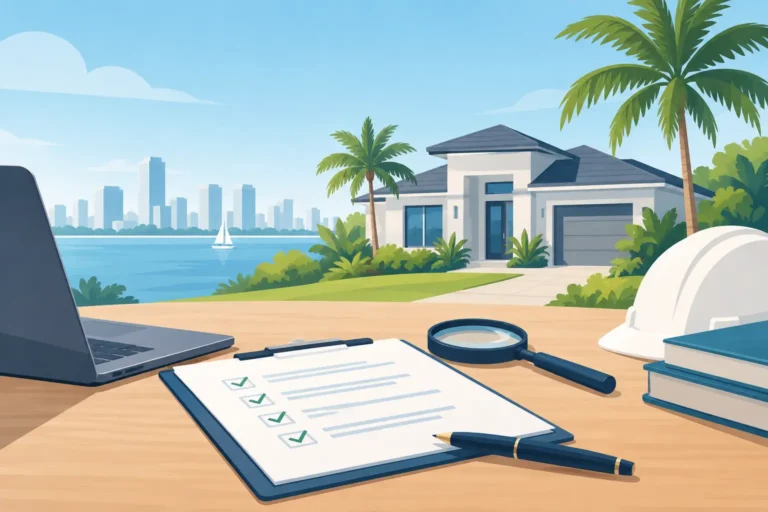
Next, use the inspection period fully. For many buyers, that means a general home inspection plus inspections or specialist evaluations for the roof, HVAC systems, pool and spa, plumbing, electrical components, mold concerns, or structural questions when warranted. In Florida, an older roof can be an insurance issue even when it is not actively leaking. A four-point inspection and wind mitigation inspection may also be relevant to insurance underwriting, depending on the home and insurer.
Attend the inspection by video if you cannot be there. Ask the inspector to separate safety concerns, likely near-term expenses, and routine maintenance. Every inspection report will contain a long list. The decision is not whether the house is perfect. It is whether the findings match the property’s age, condition, and price, and whether the items you cannot accept are manageable before closing.
Insurance and flood questions cannot wait
Insurance should be investigated as soon as the contract is accepted, not a few days before closing. Hurricane risk affects roof requirements, deductibles, wind coverage, and carrier availability. During hurricane season, inspections, repairs, binding coverage, and closing schedules can be affected by a named storm or carrier restrictions. A lender will have requirements, but a cash buyer should be just as careful.
Flood is separate from homeowners insurance. A property outside a mapped flood zone is not the same thing as a property with no flood risk. Review the flood zone, elevation information when available, prior flood disclosures, drainage around the site, and any insurance quote appropriate to the property. A home near water in Dr. Phillips, Bay Hill, or along one of Winter Park’s lakes may raise different questions than a home on an interior lot in Lake Mary, but every property deserves its own review.
An insurance agent, lender, and attorney can explain how the requirements apply to your situation. Do not rely on a seller’s past premium as a forecast of your own cost.
Read the HOA Documents Before the Clock Runs Out
Many remote buyers focus on the monthly HOA amount and stop there. The amount matters, but the documents matter more. In communities such as The Springs, Sweetwater Oaks, Heathrow, Lake Forest, or Baldwin Park, read the declaration, rules, budget, reserve information if provided, recent meeting minutes, pending assessments, rental restrictions, pet provisions, architectural review rules, and any transfer or approval requirements.
For golf or gated communities, ask practical questions. What are the gate access procedures for vendors and guests? Is club membership separate from homeownership? Are there restrictions on parking, exterior changes, fencing, or short-term rentals? Is irrigation or lawn care included, and if so, what exactly is covered?
Also distinguish an HOA from a community development district. CDD assessments are commonly shown on the tax bill and can continue for many years. They are not interchangeable with HOA dues. The title company, lender, and a qualified tax professional can help you understand the applicable charges, but you should see them before removing contingencies.
Build a Closing Plan Before You Make an Offer
A remote closing is routine when the plan is made early. Your lender, title company, insurer, inspector, and agent need current contact information and a shared timeline. If financing is involved, provide requested documents promptly. Underwriters do not make exceptions because a buyer is traveling, and last-minute changes to assets, employment, credit, or insurance can create avoidable delays.
Florida buyers should also be alert to wire fraud. Confirm wiring instructions through a known telephone number for the title company, ideally using a number obtained independently rather than from an email. Do not act on revised wire instructions sent by email or text without direct verification. This is one of the most preventable risks in a remote transaction.
Ask early whether documents can be signed electronically, through a remote online notarization process, or with a mobile notary where you are located. The answer depends on the closing agent, lender, document type, and your particular transaction. A title company or real estate attorney should confirm the process rather than leaving it to the final week.
Plan for the day after closing too
Remote buyers should arrange utilities, insurance activation, locks or rekeying, mail handling, and property access before closing. If the house will sit vacant for a period, discuss vacancy provisions with the insurer and consider how the property will be checked after heavy rain or a storm. Pool service, lawn care, and irrigation oversight may also need to begin immediately, particularly for homes with mature landscaping or pools.
If you intend to claim Florida homestead exemption, learn the county filing requirements after establishing the property as your permanent residence. Buyers moving within Florida may also want to ask a CPA or county property appraiser about Save Our Homes portability. Florida has no state income tax, but that does not mean property tax planning is automatic or simple.
When You Should Wait Instead of Buy Remotely
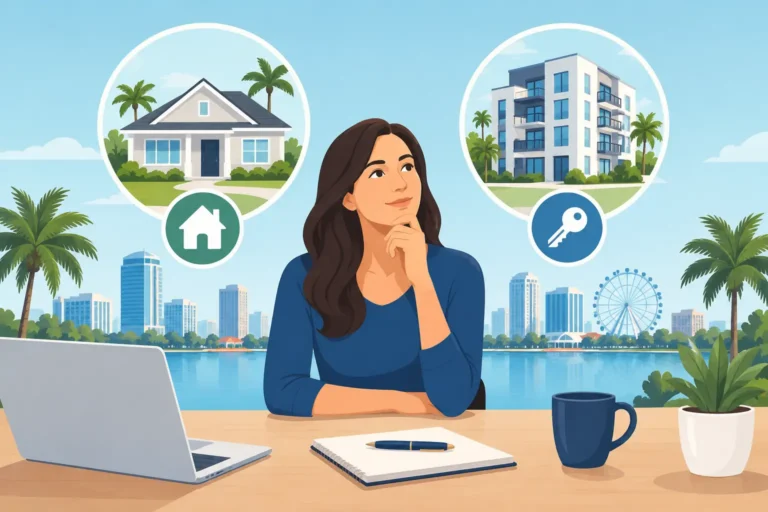
Sometimes the correct answer is to wait for an in-person visit. If you are deciding between several communities, if a home has a complicated renovation history, if the lot or water view is central to the value, or if inspection findings are difficult to interpret remotely, a trip may be worth the cost. The same is true when the home is at the upper end of your budget and there is little room for a costly surprise.
Buying sight unseen is most successful when the buyer is clear about priorities and willing to reject a property that cannot be adequately verified. A careful remote process does not eliminate uncertainty. It reduces uncertainty to the kind that can be understood, priced, and accepted before you own the house.
Thinking about selling?
What is your home actually worth?
An online estimate is a starting point, not a price. Send me your address and I’ll put together the recent closed sales near you, the current competition and a price range that holds up with an appraiser. No cost, nothing owed.
Or ask me a question here and I’ll get back to you the same day.